- Quick Answer: Is the Dutch Shepherd a Good Protection Dog?
- Origins and Background of the Dutch Shepherd
- Dutch Shepherd vs. Belgian Malinois
- Temperament, Drive, and Trainability
- Are Dutch Shepherds Good Family Protection Dogs?
- What to Consider Before Buying a Dutch Shepherd
- Is a Dutch Shepherd the Right Protection Dog for You?
- Key Takeaways
A Dutch Shepherd protection dog is a great choice for those who are looking for a highly capable working breed that share similar qualities to the Belgian Malinois. As it’s closely related to the Malinois, the Dutch Shepherd is noted for its intelligence and strong work ethic. Many handlers describe it as having a similar drive but, in some cases, the Dutch Shepherd can be slightly more level-headed and easier to live with.
This article covers the breed’s origins, compares it with the Belgian Malinois and German Shepherd, examines its temperament and family suitability, and outlines what prospective owners should know before making a purchase.
Quick Answer: Is the Dutch Shepherd a Good Protection Dog?
Yes. The breed is valued in police, military, and protection work for its intelligence, athleticism, trainability, and its willingness to work closely with its handler. It shares many of the Malinois’s working abilities, and some lines are even described as slightly more even-tempered in the home.
Like the Malinois, however, the Dutch Shepherd is a high-energy working breed. It thrives with an engaged owner, as opposed to a low-maintenance lifestyle. Its biggest practical drawback is rarity. Professionally trained Dutch Shepherds can be harder to find.
Origins and Background of the Dutch Shepherd
Having originated in the Netherlands, the Dutch Shepherd was a versatile farm dog that was used for herding livestock and guarding property. Eventually, its intelligence and adaptability made it highly well-suited for police, military, and protection work.
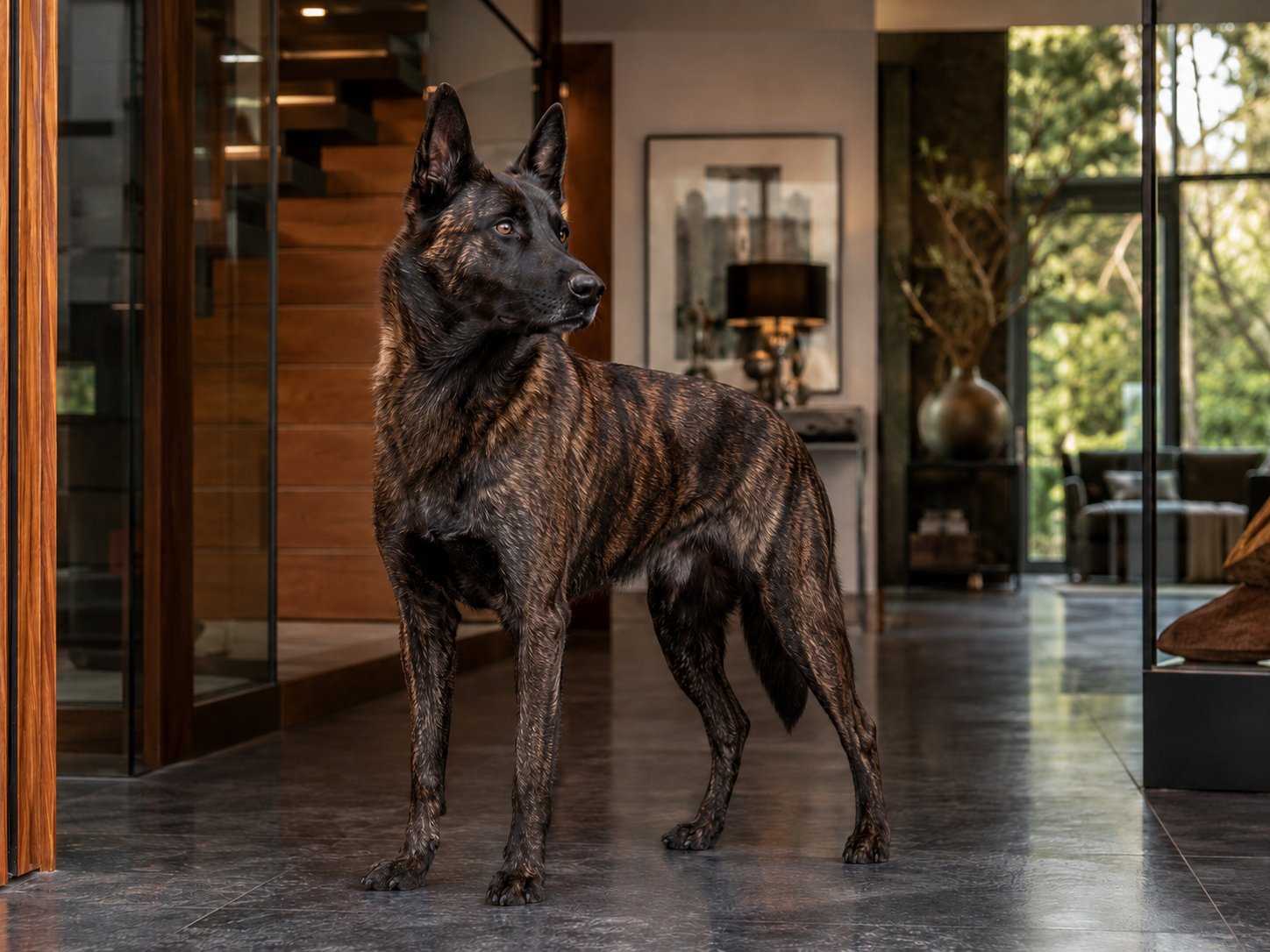
Closely related to the Belgian Malinois and German Shepherd, the breed is distinguished by its brindle coat, available in gold or silver brindle with short, long, or rough-haired varieties. Unlike the German Shepherd and Belgian Malinois, however, the Dutch Shepherd was never widely-promoted beyond working-dog communities. Because of this, well-bred, professionally trained Dutch Shepherds are harder to find, especially in the United States.
Dutch Shepherd vs. Belgian Malinois
Making a comparison between the Dutch Shepherd vs Malinois, we find that the two breeds have many more similarities than differences. Both are intelligent, athletic, and highly-trainable working dogs that are capable of excelling in protection roles. The most common distinction is that some Dutch Shepherd lines are considered slightly more even-tempered and handler-focused, while the Malinois is often viewed as more intense.
The Dutch Shepherd’s brindle coat also sets it apart from the Malinois’s fawn coat with a black mask. Belgian Malinois are much more common, which makes them easier to find as professionally trained protection dogs. Regardless of the breed – temperament, genetics, and training matter far more than general breed characteristics, and reputable trainers focus on matching the right dog to the owner.
Dutch Shepherd vs. German Shepherd
In the Dutch Shepherd vs German Shepherd comparison, the German Shepherd is generally larger with a heavier build, and is more familiar to the public. The Dutch Shepherd is typically more agile with a higher-drive, making its working style closer to that of the Belgian Malinois.
Many working-line Dutch Shepherds are also recognized for their relatively robust gene pool, though no breed is free of potential health concerns. For many buyers, the Dutch Shepherd occupies a middle ground between the athleticism of the Malinois, and the broader public familiarity of the German Shepherd.
Temperament, Drive, and Trainability
The Dutch Shepherd temperament is characterized by loyalty, alertness, trainability, and having a strong bond with its handler. These qualities make the breed an exceptional choice for protection work and, in the right home, a devoted family companion.
Dutch Shepherds possess high prey and work drive, so they need regular physical exercise and mental stimulation. Successful Dutch Shepherd training channels their natural instincts rather than suppressing them. When they are professionally trained and socialized properly, Dutch Shepherds are naturally protective, discerning, and are able to respond appropriately in real-world situations.
Are Dutch Shepherds Good Family Protection Dogs?
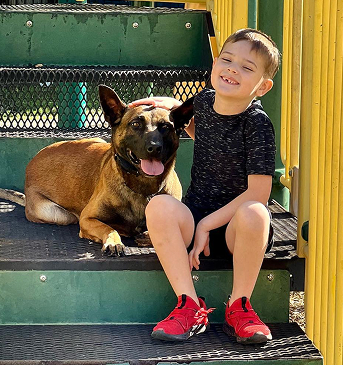
Yes. A well-bred, properly trained, and well-socialized Dutch Shepherd as family protection dog can be both a loyal companion and a capable protector. The breed tends to form very close bonds with the household and, when raised and trained appropriately, does quite well with children.
Their loyalty and readiness make them well suited for home and personal protection. It’s important to note that they perform best in active households, ones that provide consistent leadership, regular exercise, and ongoing training. As with any protection breed, professional training and socialization are indispensable.
What to Consider Before Buying a Dutch Shepherd
The biggest considerations before purchasing a Dutch Shepherd for personal protection include: sourcing, your lifestyle, and the dog’s proven temperament and training. Because professionally trained Dutch Shepherds are relatively rare, it’s best to work with an experienced provider that has access to quality European working bloodlines. Scott’s K9 sources elite European working dogs and offers Dutch Shepherds among its protection dogs.
Ask about health screening, temperament evaluations, socialization, and available health or performance guarantees. A comprehensive handler course and post-sale support can also help owners succeed with a high-drive working breed. And, most importantly, be realistic about your ability to meet the Dutch Shepherd’s ongoing training and high-activity needs.
Is a Dutch Shepherd the Right Protection Dog for You?
A Dutch Shepherd may be the right choice if you want Malinois-level working ability with a temperament that some owners find slightly more manageable. It is an excellent fit for owners with an active lifestyle who are prepared for the responsibilities of a high-drive working dog.
If you are more interested in a protection dog that is more widely available, and possesses a somewhat calmer working style, a Belgian Malinois or German Shepherd may be a better fit. Ultimately, the individual dog’s temperament, breeding, and training matter more than the breed itself. An experienced protection-dog provider can help match the right dog to your family’s lifestyle and environment.
Key Takeaways
The Dutch Shepherd protection dog is an intelligent, athletic working breed and a strong, though less common, alternative to the Belgian Malinois. It combines exceptional working ability with a temperament that some owners find slightly more even-tempered, while standing out with its distinctive brindle coat.
Active owners and families who are prepared to provide consistent training, socialization, and engagement are best suited for this breed. Because professionally trained Dutch Shepherds are relatively rare, working with a credentialed provider is important. At the end of the day, the best protection dog is the one whose temperament, training, and abilities are well-matched to your lifestyle with the guidance of an experienced professional.