- What Is a Personal Protection Dog?
- Who Typically Owns a Personal Protection Dog?
- Daily Life with a Personal Protection Dog
- Family Integration & Social Behavior
- Travel & Transportation with a Personal Protection Dog
- Commands, Handling & Owner Responsibility
- Safety & Control Expectations
- Lifestyle Benefits of a Personal Protection Dog
- Common Myths about Personal Protection Dogs
When most people think about a personal protection dog, they think of an intimidating movie prop pacing a gated house all day. In reality, protection dog ownership looks a lot more normal. They are a part of morning routines, family dinners, errands, and road trips. The highly-trained, exceptionally aware dog quietly does its job in the background.
What Is a Personal Protection Dog?
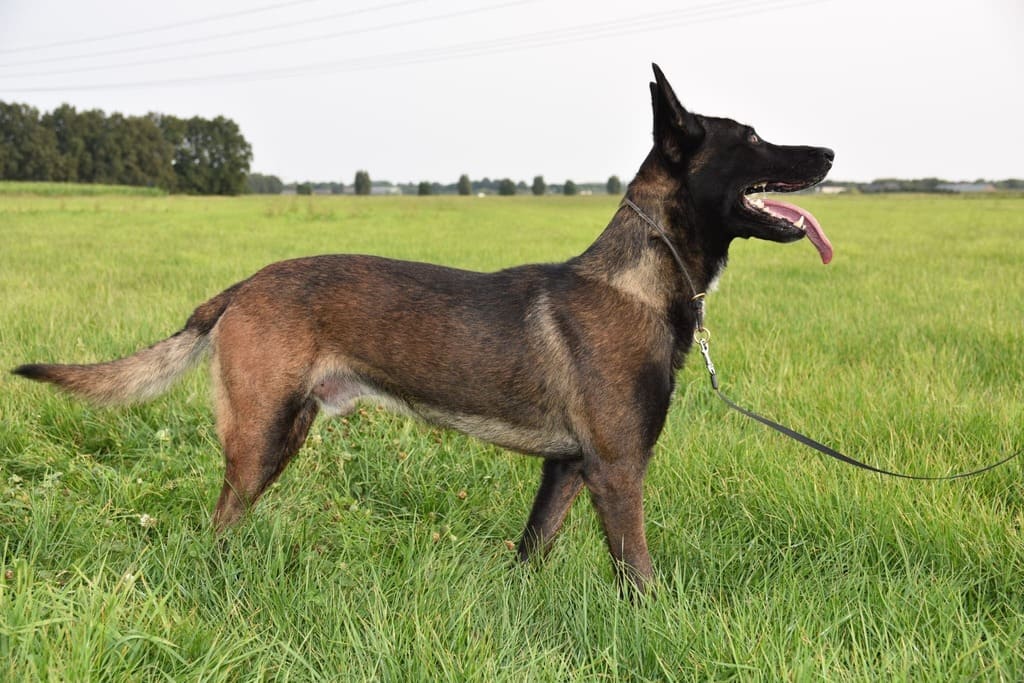
A personal protection dog is a professionally trained canine that is capable of providing controlled, situational protection, while at the same time remaining calm, obedient, and socially stable. Unlike guard dogs, which tend to rely on instinct alone, a trained protection dog is taught to respond only to real threats, and only under clear command or legitimate danger.
These dogs are trained to read human behavior, environments, and cues. This makes them highly adaptable companions. Whether the dog is placed as a family protection dog or an executive protection dog, the goal is the same – safety without disruption.
Who Typically Owns a Personal Protection Dog?
Owners of a protection dog come from many walks of life. Some are families who are simply seeking peace of mind at home. Others are business owners, public figures or professionals who travel a lot and desire discreet, reliable security.
Households with children may choose a family protection dog, as well as those who own large properties or may have concerns about their privacy. An executive protection dog may accompany an individual to offices, hotels, and public settings where awareness of each situation matters more than visible security. What these owners have in common is the desire for protection that blends into daily routines, and not something that controls them.

Daily Life with a Personal Protection Dog
The day-to-day life with a protection dog is actually fairly routine. The dog wakes up, eats, exercises, and relaxes just like other well-trained pets. The difference is in their awareness and their discipline.
A trained protection dog understands the difference between when it’s working and when it’s just being a dog. Most of the time, they’re observant yet unobtrusive. Owners often say that daily life feels calmer, not tenser, because having the dog present removes background anxiety.
Not sure which breed suits your lifestyle?
Family Integration & Social Behavior
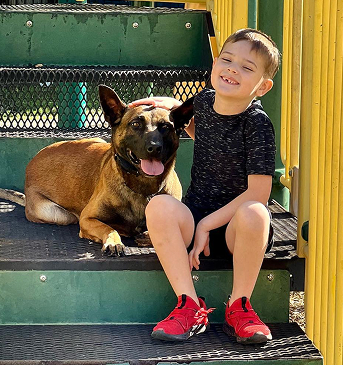
A family protection dog that is properly placed is raised and trained with social stability as the top priority. These dogs are comfortable around children, guests, and extended family members. They don’t react impulsively, and they’re taught to be able to differentiate between normal household activity and a situation that causes genuine concern.
In family settings, a personal protection dog will often become deeply bonded to people in the household, acting as a companion and a quiet guardian. They’re affectionate but not clingy and protective, without being aggressive.
Travel & Transportation with a Personal Protection Dog
Traveling with a protection dog is easygoing and pretty straightforward. These dogs are trained for exposure to new environments. It might be car travel, airports (where permitted), hotels, elevators, and other types of crowded spaces, they are all a part of their foundational training.
An executive protection dog is prepared and conditioned to remain composed while in the midst of frequent travel. Owners often convey that their travels feel easier, not harder, because the dog stays calm and attentive in unfamiliar situations.
Commands, Handling & Owner Responsibility
Protection dog ownership comes with responsibility, but it’s not as complex as you might think. At delivery, owners are taught clear handling protocols, commands, and expectations. Scott’s K9 provides support beyond delivery, for questions that arise as well as training reinforcement.
A trained protection dog responds to simple and consistent commands. Owners don’t need to have prior dog-handling experience, they do, however, need to stay actively involved. When the owner is consistent, respectful, and provides reinforcement, the dog stays sharp and confident. A personal protection dog is a partnership, not something you set and forget like the timer on a coffee maker.
Safety & Control Expectations
One of the most important aspects of a protection dog is control. These dogs are trained to de-escalate situations through presence and obedience, not through aggression.
Whether it’s a family protection dog at home or an executive protection dog in public, safety protocols are built into the training. The dog should never act independently out of fear or impulse. Control and discernment are what separate elite dogs from poorly-trained ones.
Lifestyle Benefits of a Personal Protection Dog
- Beyond security: A personal protection dog often enhances the overall quality of life, with owners reporting that they have increased confidence, a reduction in stress, and a greater sense of ease in everyday routines.
- For families: A family protection dog provides peace of mind without creating a fear-driven lifestyle. This lets households feel safe while staying relaxed and engaged.
- For professionals: An executive protection dog offers discreet and reliable protection that fits effortlessly into demanding schedules and established routines.
- In both situations: Protection dog ownership supports independence and daily enjoyment, it doesn’t at all limit how owners live, work or travel.
Common Myths about Personal Protection Dogs
There are plenty of myths surrounding the protection dog world. One of the biggest is that these dogs are aggressive, when in reality, the opposite is true. A well-bred, trained protection dog is calm, stable, and really quite predictable.
Another myth is that protection dog ownership requires constant drills or intense handling. In practice, these dogs are trained to go about normal living and to respond only when it’s necessary.
Cost, Time Commitment & Long-Term Care
A personal protection dog is an investment, not just financially, but emotionally, as well. The costs involved with acquiring a trained protection dog are reflective of breeding quality, training time, and lifetime support.
The time commitment is reasonable and ongoing. To keep the dog performing at its best, regular exercise, engagement, and occasional refresher training is necessary. Protection dog ownership is a long-term investment, and owners should plan on years of care, responsibility, and of course, companionship.
How Professional Breeding & Training Shape Ownership Experience
The difference between a good experience and one that is stressful often comes down to breeding and training. Professionally bred dogs are purposefully chosen for their temperament, health, and working ability, well before training even begins.
A well-bred personal protection dog will transition smoothly into home life. Whether the dog is placed in a family protection dog situation or as an executive protection dog, proper training will ensure that the dog adapts to the owner, and not the other way around.
A Personal Protection Dog Is More Than Security — It’s a Trusted Partner in Daily Life
When elements are working well together, a protection dog will enhance your life. They provide security, companionship, and they give families and individuals the confidence they need, while seamlessly blending into everyday routines.
Protection dog ownership is about trust, training, and partnership. For the right owner, a trained protection dog becomes a true part of the family. Are you ready to explore the possibilities? Contact Scott’s K9 today.