
- What a Protection Dog Adds to a Large Estate
- Why Estate Owners in the Hamptons and Tri-State Area Choose Protection Dogs
- How a Protection Dog Fits a Layered Estate Security Plan
- Breeds and Training Level Suited to Estate Life
- Seasonal and Lifestyle Factors Specific to the Region
- What to Look for in a Protection Dog Provider
- Integrating a Protection Dog into an Estate Household
- Key Takeaways
Estate owners who are considering protection dogs in the Hamptons and throughout the tri-state region may find that a professionally trained protection dog can provide a layer of security that cameras, gates, and even on-site personnel cannot. A well-trained dog acts as an adaptive security solution that lives with the family and is able to respond to potential threats when directed by its handler. When protection dogs are incorporated into a broader security strategy, they are even more effective. This article explores why estate owners choose protection dogs, how they reinforce existing security measures, breed and training considerations, seasonal and lifestyle factors that are unique to the region, and how to choose the right dog.
What a Protection Dog Adds to a Large Estate
A trained protection dog can add early threat detection, visible deterrence, and a controllable security response across a large estate, whether security personnel are present or not. Unlike structural security elements like cameras, alarms, and access control systems, a protection dog can move throughout the property and respond to unusual situations using both its instincts and professional training.
This combination of mobility and responsiveness is one of the family protection dog’s primary advantages. However, a protection dog is most effective when it complements existing security measures rather than replacing them. Perimeter security and monitoring systems are still important. A protection dog is a living companion that needs daily care, exercise, training reinforcement, and handler involvement. These responsibilities should always be considered before acquiring a protection dog.
Why Estate Owners in the Hamptons and Tri-State Area Choose Protection Dogs
Many Hamptons homes experience patterns of seasonal occupancy. They might be lightly staffed or even vacant for parts of the year before becoming filled with guests during the summer months. Large estates might also include wooded acreage, waterfront access, long driveways, and expansive perimeters that can be difficult to continuously monitor. And, there are those that prefer a discreet security presence, rather than a highly visible protective detail. Estate protection dogs can help address issues related to trespassing, unfamiliar visitors, and potential intrusion while also providing peace of mind for those that stay on the property while principals are traveling. It’s because of this that many owners look at protection dogs as a practical component of a broader estate security plan.
How a Protection Dog Fits a Layered Estate Security Plan
A protection dog works best when it is incorporated as one layer within a comprehensive estate security strategy. Many times, large properties will rely on multiple layers of protection. This may include gates and fencing at the perimeter, cameras and sensors for detection, alarm systems for monitoring, and, in some cases, on-site security personnel. Within this framework, the dog provides a unique capability: mobility. A trained dog can move throughout the property, accompany family members, assess unusual situations, and, when necessary, provide a visible deterrent.
On estates with household staff or dedicated security teams, it’s necessary to have clear roles in place with a designated primary handler. At the same time, protection dogs are also household companions that live alongside the family.
Working with Estate Staff and Existing Security Teams
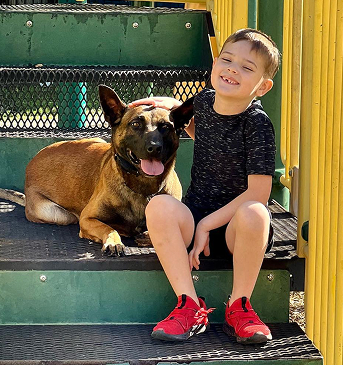
The dog should have a dedicated primary handler who lives on the property or is regularly present so a strong working relationship develops over time. Household employees, groundskeepers, frequent visitors, and family members should also be introduced properly. This way, the dog learns who belongs on the property and who might require more scrutiny. Well-trained luxury home security dogs are socialized to stay calm and neutral around people they recognize, while also responding appropriately when their handler directs them to, or in the face of a legitimate threat. For estates that employ security personnel, establishing clear protocols so the dog’s handler and security team work together effectively is also important.
Breeds and Training Level Suited to Estate Life
German Shepherds and Belgian Malinois are among the most common choices in estate environments because they combine trainability, a strong protective presence, and the ability to be capable family companions. A German Shepherd estate guard dog is often confident, even-tempered, and integrates well into households with children. The Belgian Malinois protection dog is known for its exceptional athleticism, responsiveness, and working drive.
Regardless of the breed, estate owners are best served by a fully trained, socialized protection dog, as opposed to a young prospect or sport-only dog. Off-leash obedience, stability, and controlled protection training are more important than breed alone. In the end, the best match depends on the family’s lifestyle, property, and security objectives.
Seasonal and Lifestyle Factors Specific to the Region
The Hamptons and wider tri-state region come with unique lifestyle factors that can influence the selection and management of personal protection dogs for estates.
Summer Months
More family gatherings, guests, contractors, social events, and household staff mean that the protection dog must be well socialized, stable, and comfortable around different people while staying responsive to its handler.
Off-Season
Winter months usually mean less occupied households, when a dog’s alert presence may become an even more valuable component of the entire security plan.
And, there are owners who divide their time between multiple residences, such as a city home and a seasonal estate, making adaptability and travel readiness important traits.
Waterfront properties, forested acreage, and changing weather conditions can all affect daily exercise routines. Active breeds like Shepherds and Malinois often thrive in estate settings that provide ample space for physical activity.
What to Look for in a Protection Dog Provider
When it comes to protection dog providers, buyers should choose one with verifiable training credentials, documented references, health testing, performance guarantees, and ongoing support after placement.
Buyers should also ask about the trainer’s background (police and/or military K9), certifications, and their dog selection process. For family estates, a protection dog that is comfortable with family members and children is non-negotiable. Scott’s K9 provides fully trained German Shepherds and Belgian Malinois, hand-delivers dogs to clients, includes handler instruction, and offers continued support following placement.
Integrating a Protection Dog into an Estate Household
Successful integration starts with a structured handler course that helps household members understand commands and daily routines. The dog should be introduced gradually to the property, family members, staff, guests, and any existing pets. Defined handling responsibilities, ongoing training maintenance, and downtime help create consistency. Protection training should be reinforced over time; it is not simply a one-time accomplishment.
Key Takeaways
Protection dogs in the Hamptons or tri-state properties can provide a mobile, intelligent layer of deterrence and detection. They work right alongside cameras, gates, alarms, and human security personnel. German Shepherds and Belgian Malinois remain the leading choices, but a successful placement depends on matching the dog to the family’s lifestyle and property. Seasonal occupancy, expansive grounds, and privacy concerns make this area well suited to professionally trained protection dogs. Owners should choose providers that offer fully trained, well-socialized dogs, handler education, and ongoing support after placement. Carefully assessing your property’s unique characteristics, daily routines, and security needs will help you decide whether a protection dog is the right fit.