- Yes, With the Right Dog and Training
- What Makes a Protection Dog a Good Family Companion
- Are Protection Dogs Safe Around Children?
- Daily Life with a Family Protection Dog
- Belgian Malinois and German Shepherds in Family Homes
- Choosing the Right Protection Dog for Your Family
- Owner Responsibilities for a Safe Family Environment
- Key Takeaways
A properly selected, trained, and socialized protection dog can be a loving family companion and a capable protector. What makes this possible are a few different things: a stable temperament, professional training, thorough socialization, and an owner (you) who provides clear and responsible leadership. At home, a quality protection dog should be calm, obedient, and social. Protective behavior is displayed only when it’s appropriate, and the dog stays under control.
It’s somewhat understandable that families, sometimes, assume that protection and gentleness can’t exist in the same dog. But, with the right dog and training, they certainly can. This article explores the question – are protection dogs good with kids, safety around children, everyday family life, choosing a suitable dog, and the owner’s responsibilities.
Yes, With the Right Dog and Training
A well-bred, properly trained, and thoroughly socialized protection dog can be a safe, affectionate family pet and a capable protector. Around the house, the dog’s normal setting should be calm. It should not be suspicious of every visitor or prowling like a furry security dog from room to room.
Protective behavior is a trained, controlled response to a real situation. It isn’t the dog’s constant mood. Reaching that balance involves more than training, though. The dog must suit the household, and the owner must maintain structure, reinforce obedience, and follow professional handling guidance every single day.
What Makes a Protection Dog a Good Family Companion
This starts with temperament. Stable, confident, and clear-headed dogs are better equipped to handle family life without overreacting to every sound, every visitor, or even the usual bursts of household chaos.
Training adds reliability. Intensive obedience and controlled protection work teaches the dog to respond to direction. Broad socialization builds the dog’s comfort around children, pets, visitors, and regular public settings. Scott’s K9 completes each dog’s final training in a home environment, to help prepare the dog for day-to-day life with a family and other animals.
Breed is important but it isn’t the deciding factor. A protection dog’s temperament with family, training, and social experience must all work together.
Are Protection Dogs Safe Around Children?
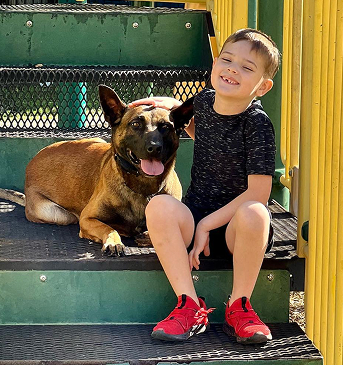
When carefully matched to the household and properly handled, a well-trained, well-socialized protection dog can be gentle and safe around children. Stability and reliable obedience are what matter most. The dog should stay composed around sudden movement, noise, excitement, and all of the commotion kids bring with them.
Even with this, though, ordinary dog-safety rules apply. Adults should always supervise interactions between any dog and young children. And the children need to learn not to climb on, corner, tease, or disturb a dog that is resting. No dog fits every family. A thoughtful match, clear boundaries, and ongoing owner involvement are all important.
Teaching Children to Interact With the Dog
Children need to follow rules, too. Teach them to give the dog space while it’s sleeping, eating, or settling into a quiet spot. Pulling their ears, climbing on the dog, grabbing their toys, and getting directly in its face should always be taught to be off-limits.
Adults should model calm, gentle interaction and include children in easy, age-appropriate routines, such as helping prepare a meal or practicing an obedience cue with supervision. Young children and dogs should never be left unsupervised, regardless of how steady the dog is.
Following the protection dog provider’s handler guidance helps the entire family to build safe and consistent habits from the very start.
Not sure which breed suits your lifestyle?
Daily Life with a Family Protection Dog
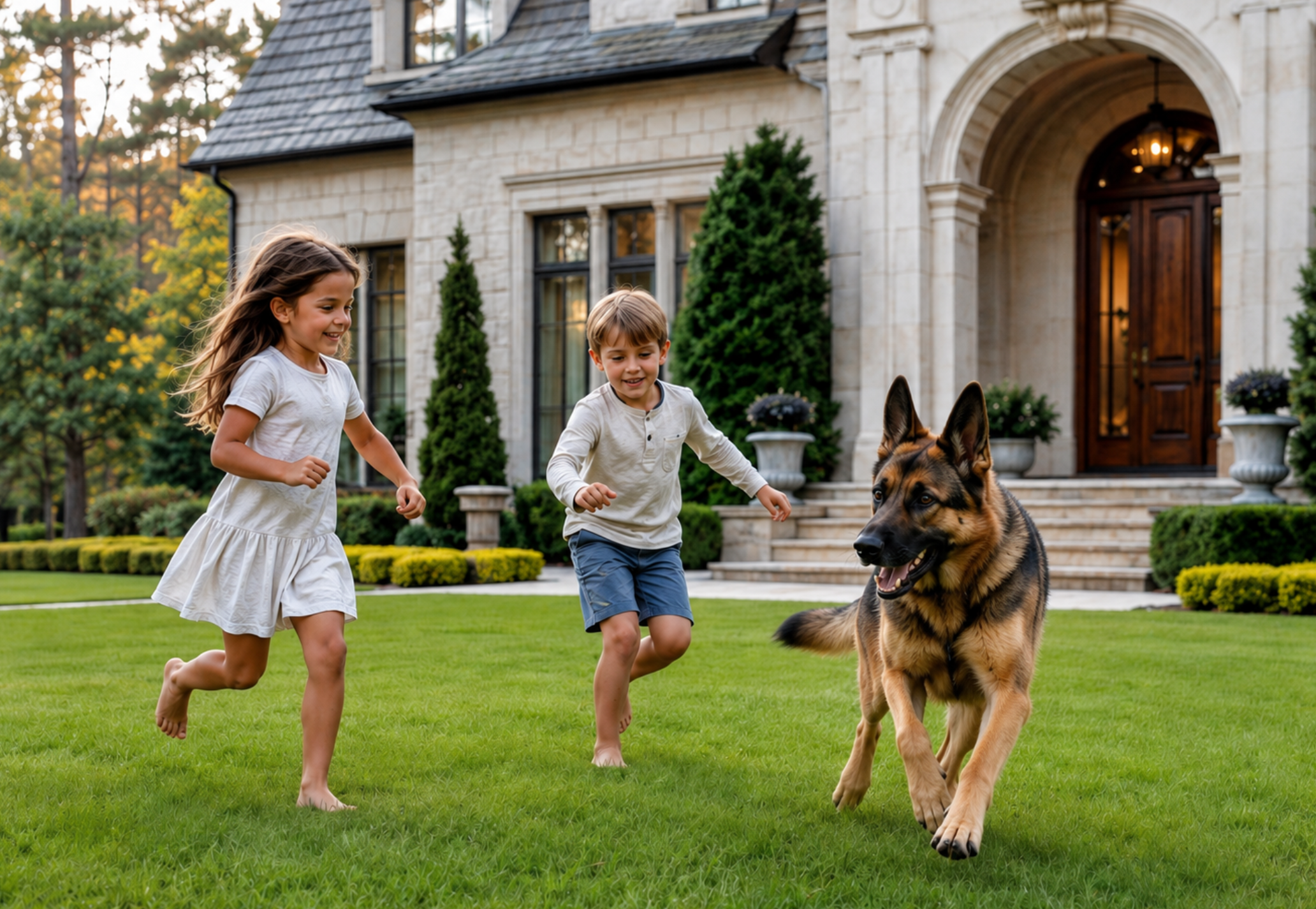
Luckily, most days aren’t filled with drama. A family protection dog settles into the household similarly to any well-trained companion, it joins walks, plays, travels, and relaxes while everyone watches TV. These dogs are alert by nature, but they shouldn’t be spending every waking minute patrolling the windows or treating the mail carrier like an international incident.
They do need regular exercise, mental stimulation, structure, and consistent expectations. Training doesn’t end when the dog comes home, either; obedience has to be a part of everyday life. Family protection dogs have a tendency to thrive when they’re included and treated as members of the family, not like security equipment that’s parked in a corner.
Belgian Malinois and German Shepherds in Family Homes
German shepherd and Malinois family dogs are commonly selected for protection work because these dogs are intelligent, confident, loyal, and highly trainable. With the right training and a thoughtful household match, both of these breeds can also become affectionate and reliable family companions.
They aren’t exactly low-maintenance, though. These dogs are high-drive working breeds that need exercise, structure, mental challenges, and regular engagement. Without these things, all of that intelligence and energy can find outlets that are… less than helpful, sometimes involving furniture.
Whether German Shepherds or Malinois make suitable family dogs largely depends on the individual dog and the family’s lifestyle. Neither breed is automatically the best choice for every home. Owner commitment matters just as much as breed preference.
Choosing the Right Protection Dog for Your Family
The right match depends on the entire household, not just which dog catches your eye first. Children, existing pets, activity level, daily routines, living space, and previous dog-handling experience all have their role in what will work.
A reputable provider thoroughly evaluates these details; they don’t offer the same kind of dog to every family. Owners also need to be realistic about the time they can spend with the dog for exercise, continued training, and daily involvement. Even the best-trained dog needs somewhere to put its energy.
Scott’s K9 emphasizes pairing the right dog with the right owner and introduces the dog to existing household pets at delivery.
Owner Responsibilities for a Safe Family Environment
Bringing the dog home isn’t the end of the work. Owners need to keep structure in place, reinforce obedience, and responsibly handle the dog every single day. A steady routine, regular exercise, mental stimulation, and ongoing socialization help keep the dog settled and responsive.
Family interactions, especially those that involve small children, still require supervision. Owners should also follow the provider’s handler guidance and any local laws that apply.
A protection dog is fully capable of adding a meaningful layer of security, but the dog should never be the family’s entire safety plan. Secure doors, household awareness, emergency planning, and sensible precautions all still matter. The dog is part of that larger picture, and not a replacement for it.
Key Takeaways
So, can protection dogs be family pets? With the right temperament, professional training, thorough socialization, and responsible ownership, yes, a protection dog as a family companion is absolutely possible. They can be both loving companions and capable protectors.
Safety around children rests on the same fundamentals: a stable dog, reliable obedience, adult supervision, respectful interaction, and a careful match to the household. No breed or individual dog suits every family, which is precisely why professional guidance and honest owner commitment matter so much.
Families that are considering this step can explore Scott’s K9’s family friendly protection dogs, or they can request a consultation to learn what type of dog may fit their home and lifestyle.