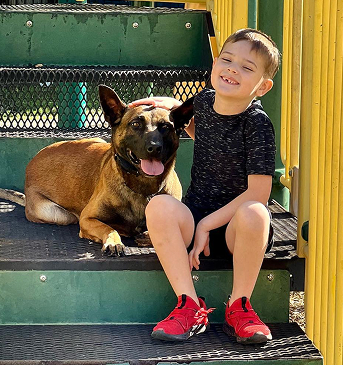

- What a Fully Trained German Shepherd Actually Is
- The German Shepherd Breed: Origin, History, and Working Purpose
- Why German Shepherds Are Chosen for Protection Work
- What Sets Scott’s K9 German Shepherds Apart
- Trained German Shepherds Currently Available
- What a Trained German Shepherd Costs
- How the Placement Process Works
- Is a Trained German Shepherd the Right Fit for Your Household
- Join the German Shepherd Waiting List
- Frequently Asked Questions About Trained German Shepherds
A fully trained German Shepherd is an adult dog that has completed structured obedience and controlled protection training before placement, then been matched to a specific household, hand delivered, and formally transferred to its new handler through in-home instruction. It is not a puppy and it is not a partially trained dog. It arrives ready to live and work in your home.
Scott’s K9 is a veteran owned protection dog company led by Steve Scott, a US Army veteran, former head trainer of a police department K9 unit, and a certified Police K9 Master Trainer and Certifying Official. For more than 20 years, Scott’s K9 has hand selected dogs from European working line programs and placed them with families, executives, and security professionals worldwide.
Availability is limited by design. Every dog is personally selected and trained or supervised by Steve Scott, which holds annual placement to roughly 24 dogs and usually means one to three are available at any given time. That is why a waiting list exists, and why most serious buyers join before the right dog appears rather than after.
This guide covers what a fully trained German Shepherd actually is, where the breed came from, how working lines differ from show lines, what sets a Scott’s K9 placement apart, what a trained German Shepherd costs, how the placement process works, and how to join the waiting list.
What a Fully Trained German Shepherd Actually Is
A fully trained German Shepherd is an adult dog that has completed advanced off-leash obedience, controlled protection work, and environmental proofing, and that is handed to its new owner through in-person handler instruction. The training is finished before the dog arrives. The owner’s role is to maintain it.
Four very different dogs are sold under similar language, and knowing the difference is the fastest way to evaluate any provider.
- A puppy is untrained. Temperament, nerve, and working ability are still projections, and protection capability is years away.
- A started or green dog has foundation obedience and early protection development but is not finished and is not ready for a civilian household.
- An obedience-only companion is responsive and well mannered but has no protection training and should never be presented as a protection dog.
- A fully trained protection dog has completed the full arc: advanced off-leash obedience, controlled protection work, environmental proofing, household socialization, and a formal handler transfer.
Trained German Shepherds are generally placed into one of three roles. Advanced companion obedience suits a household that wants a highly controlled, socially reliable dog and values presence over engagement. Family and home protection is the most common placement, where the dog lives fully in the home and responds under the handler’s direction. Executive or personal protection covers principals who travel, move between residences, and work alongside security teams. Scott’s K9 trains every dog to the same standard and matches it to the role, rather than selling tiers of training.
Every Scott’s K9 placement includes off-leash obedience, controlled protection work, environmental exposure, socialization inside an active family home, and handler transfer training at delivery. A dog of this caliber is designed to support personal and family security. Proper integration and continued structure remain important, and establishing both is what the in-home handler training is for.
The German Shepherd Breed: Origin, History, and Working Purpose
The German Shepherd was developed in Germany at the end of the 1800s as a working dog selected for intelligence, structure, and usefulness rather than appearance. Nearly everything the breed does today, from police patrol to family protection, follows from that founding decision.
Max von Stephanitz and the First Registered German Shepherd
In April 1899, Captain Max von Stephanitz, a former German cavalry officer, saw a herding dog named Hektor Linksrhein at a dog show and bought him. He renamed the dog Horand von Grafrath, and Horand became the first entry in the new breed studbook under the registration number SZ1.
On April 22, 1899, at a show in Karlsruhe, von Stephanitz and Artur Meyer founded the Verein für Deutsche Schäferhunde, the first German Shepherd Dog club, with von Stephanitz as its first president. The club built its original breed standard around a principle that still governs serious working line breeding: a pleasing appearance is desirable, but it cannot be allowed to compromise working ability.
From Herding Flocks to Police and Military Service
The German Shepherd began as a herding and flock-tending dog, then found a new purpose as grazing land in Germany declined and the herding role narrowed. Von Stephanitz promoted the breed as a service dog, and German Shepherds were used widely in military roles during the First World War.
Police agencies across Europe and later the United States adopted the breed for patrol, detection, and handler protection, the same three jobs it performs today. Public recognition followed the war through early film, most famously Rin Tin Tin and Strongheart, both of which came out of wartime service. Anti-German sentiment in the same period led American and British clubs to drop or alter the word German, and the British name Alsatian stayed in use for decades.
Working Lines and Show Lines: Why the Difference Matters to Buyers
Not every German Shepherd is bred for protection work, and the line a dog comes from is the single strongest predictor of working capability. Show line and working line German Shepherds share a name and very little else in terms of what they were selected for.
Working line breeding prioritizes drive, nerve strength, sound structure, and verified health clearances, tested against performance rather than assumed. Show line breeding prioritizes conformation to a visual standard. Both produce good dogs. Only one is selected, generation after generation, for the traits protection work requires.
Buyers researching this will run into European sport and certification systems, most often IGP, formerly called Schutzhund, and KNPV in the Netherlands. These are evaluation systems rather than guarantees, and they matter as evidence that a dog’s line has been tested. Scott’s K9 sources through long-standing relationships with established European working line programs, which is what makes selection at this level possible.
Why German Shepherds Are Chosen for Protection Work
German Shepherds are chosen for protection work because they combine trainability, stable temperament, physical capability, and visible presence in a dog that can also live comfortably in a family home. Very few breeds hold all four at once.
Biddability and trainability. The breed was developed to work in partnership with a handler, and that willingness is why a German Shepherd retains complex training and responds under direction rather than on its own initiative.
Nerve strength and environmental stability. A protection dog is only useful if it stays neutral in ordinary life. Sound nerve is what lets a dog move through crowds, traffic, hotels, and household guests without reacting, and it is a primary selection criterion long before training begins.
Size and athleticism. The breed carries enough substance to be taken seriously and enough agility and endurance to work in real environments rather than on a training field.
Natural territorial awareness. German Shepherds notice change. They read the difference between an expected visitor and an unfamiliar approach, and controlled training shapes that awareness into a response the handler directs.
A visible, well-trained dog can provide an added layer of security, and many clients value that presence. No dog guarantees deterrence or prevents a threat, and no responsible provider will tell you otherwise. What a trained German Shepherd offers is capability and control.
Buyers comparing breeds usually end up between the German Shepherd and the Belgian Malinois. Both are capable protection dogs. The German Shepherd is generally the steadier fit for a family home and a residential routine, while the Malinois brings higher drive and intensity and often suits a more active handler or a working environment. Neither is better in the abstract, and the Belgian Malinois protection dogs page covers that breed in full.
Whichever breed a client chooses, these dogs are trained for integration into family and executive life rather than isolation in a kennel. That is the difference between a dog that works and a dog that lives with you.
Not sure which breed suits your lifestyle?
What Sets Scott’s K9 German Shepherds Apart
Scott’s K9 is distinguished by four things: a veteran owner who is a certified police K9 master trainer, exclusive European sourcing with deliberately limited volume, training proofed in real environments, and personal delivery with in-home handler instruction. Each one is verifiable, and each one changes the dog you actually receive.
Veteran Owned and Led by a Certified Police K9 Master Trainer
Steve Scott is a US Army veteran who went on to serve in law enforcement and to lead his police department’s K9 unit as head trainer. He is a certified Police K9 Master Trainer and Certifying Official through multiple agencies, and Scott’s K9 has trained and supplied dogs for police departments and military units.
Clients speak with the trainer, not a sales team. Steve handles placement conversations personally and attends deliveries himself. There is more about Steve Scott on the about page.
Exclusive European Sourcing and Hand Selection
Every dog comes from an established European working line program through partnerships built over two decades, several of which give Scott’s K9 right of first refusal on exceptional candidates. Selection screens for temperament, nerve, health, and structure, and complete medical records including diagnostic imaging come with the dog.
Volume is capped at roughly 24 dogs a year, with one to three available at any given time. That is a quality control decision rather than a sales tactic. One trainer can only personally oversee so many dogs, and placing fewer dogs correctly is the priority.
Training Built for Real-World Environments
Training moves from foundation obedience through advanced off-leash control, then into controlled protection work and environmental proofing. Dogs are worked in the settings they will actually live in, including homes, vehicles, elevators, crowds, travel, and public spaces.
The measure of a finished dog is the off switch. Control, stability, and responsiveness are the standard, and a dog that cannot switch off is not a dog Scott’s K9 will place. During the final phase dogs live in an active family home rather than a kennel, so household noise, children, and guests are already familiar long before delivery.
Personal Delivery, In-Home Handler Training, and Ongoing Support
Dogs are hand delivered, never shipped, and delivery includes a two-day handler course covering commands, handling, household routine, and integration with children and existing pets. Most dogs settle into a new household within about two weeks.
Every placement carries a one-year health guarantee, a 90-day performance guarantee, and continued access to the trainer afterward. You also receive full training documentation, including video of the dog’s trained behaviors, and you can request custom video for specific commands or scenarios. Ownership carries responsibility: clients should follow all handler guidance and applicable local laws, and continued structure and reinforcement are part of keeping a trained dog reliable.
Trained German Shepherds Currently Available
Trained German Shepherds are listed below as they become available. Because every dog is hand selected and personally trained, the number of trained German Shepherds for sale changes throughout the year, and there are stretches when none are available at all. When nothing is listed, the waiting list is the way to secure priority access to the next dogs.
For the full current listing, see the German Shepherd protection dogs for sale page. To see the caliber of dogs already placed, review the dogs we have placed.
What a Trained German Shepherd Costs
A trained German Shepherd from Scott’s K9 ranges from $150,000 to $250,000 and above. Where a specific dog falls in that range depends on its pedigree and line, the depth of its training, and the certifications or titles it holds.
Pedigree and line set the baseline, since dogs from proven European working programs with verified health clearances cost more to source. Training level moves the number next, because a dog finished for executive protection has absorbed considerably more work than one finished for home protection. Certifications, titles, and age adjust it further, as a mature dog with documented performance is a known quantity rather than a projection.
The price covers the dog, its full training, the matching process, personal hand delivery, the in-home handler course, complete training documentation and medical records, the one-year health guarantee, the 90-day performance guarantee, and ongoing support. There is no separate training fee and no delivery charge added afterward.
How the Placement Process Works
The placement process runs in five stages, from the first conversation to ongoing support after the dog is home.
- Consultation with the trainer. You speak with Steve Scott directly about your household, property, routine, travel, and what you need the dog to do. This is usually one conversation.
- Matching. Scott’s K9 identifies which available or incoming dog fits your household, or advises you to wait for a better match. Depending on availability, this stage runs anywhere from days to several months.
- Final tailored training. The matched dog completes a final phase shaped around your specific environment and requirements. This typically takes several weeks.
- Personal delivery and in-home handler training. The dog is hand delivered to your home and you complete a two-day handler course covering commands, handling, and integration with your family and existing pets. Most households complete the transition in about two weeks.
- Ongoing support. You keep direct access to the trainer for guidance, and you can request additional training video as questions come up.
Placements are made worldwide, and the logistics, documentation, and import requirements for international deliveries are handled as part of the process. Timelines depend on the right dog becoming available for the right client, which is why the stages above are given as ranges rather than promised dates.
Is a Trained German Shepherd the Right Fit for Your Household
Not every household is a good fit for a trained protection dog, and an honest provider will say so. The matching conversation exists to determine fit before anyone commits.
The considerations that matter most are household structure and the ages of any children, other dogs and pets already in the home, travel patterns and whether the dog would travel too, the property type including gated communities and HOA-governed neighborhoods, and the handler’s willingness to maintain structure after the trainer leaves.
Ownership is ongoing. It means consistent handling, regular reinforcement of what the dog already knows, situational awareness in public, and compliance with local ordinances and any HOA or insurance requirements where you live. A trained German Shepherd is a capable partner in a household that maintains it. It does not remove the need for responsible handling, and it does not replace professional security in every scenario.
If a placement is not the right call for your situation, Scott’s K9 will say so. Client reviews from placed households are worth reading before you decide.
Join the German Shepherd Waiting List
The waiting list is how you secure priority access to the next trained German Shepherds when availability is limited. Because Scott’s K9 places roughly 24 dogs a year, most placements go to clients who were already on the list when the right dog became available.
- Submit your details using the form below.
- Have a brief consultation with the team about your household and what you need the dog to do.
- Be matched to a dog as one becomes available that fits your situation.
- Secure the placement and schedule delivery and in-home handler training.
Joining commits you to nothing. There is no payment at signup and no obligation to proceed, and your information is handled discreetly. The team contacts list members as dogs become available, and placement still depends on fit, so we do not promise a date.
Frequently Asked Questions About Trained German Shepherds
How much does a trained German Shepherd cost?
A trained German Shepherd from Scott’s K9 ranges from $150,000 to $250,000 and above. Three things move the number: the dog’s pedigree and line, the depth of its training, and any certifications or titles it holds. The price includes the dog, its full training, matching, personal hand delivery, the in-home handler course, documentation, and ongoing support.
Are trained German Shepherds good with children and other pets?
Yes, when the match is right. These dogs are selected for stable temperament and spend their final training phase in an active family home rather than a kennel. Fit is confirmed during matching, introductions to existing pets are handled during in-home handler training, and supervision and structure still matter afterward. No provider should tell you every dog suits every household.
What is the difference between a fully trained German Shepherd and a regular trained dog?
A fully trained protection dog has completed advanced off-leash obedience plus controlled protection work and environmental proofing, while most trained dogs have obedience only. The term to watch for when comparing providers is a started or green dog, which has foundation work and early protection development but is not finished.
How long does it take to train a German Shepherd protection dog?
Foundation work in Europe through final placement typically spans one to two years, and dogs are placed as adults rather than as puppies. The final phase is customized to the client’s household and environment, which is why timelines vary by placement rather than following a fixed schedule.
What happens if no German Shepherds are available right now?
Availability is limited and hand selected, and the waiting list is how you secure priority access to the next dogs. After you submit the form, the team follows up for a short consultation and contacts you as a dog becomes available that fits your household. There is no payment at signup and no obligation to proceed.
Should I choose a German Shepherd or a Belgian Malinois?
Both are capable protection dogs, and the right answer depends on the household. The German Shepherd is generally the steadier fit for a family home and a residential routine, while the Belgian Malinois brings higher drive and intensity and often suits a more active handler or a working environment. The Belgian Malinois protection dogs page covers that breed in detail.
Do you deliver trained German Shepherds nationwide and internationally?
Yes. Every dog is hand delivered by a trainer rather than shipped, and delivery includes a two-day in-home handler course for the household. International placements are coordinated directly with the client, and the documentation and import requirements are handled as part of the process.
What support is provided after the dog is placed?
Every placement includes the in-home handler course at delivery, a one-year health guarantee, a 90-day performance guarantee, and continued access to the trainer. You also receive full training documentation and can request custom video for specific commands. Continued structure is part of ownership, and clients should follow all handler guidance and applicable local laws.