- Often yes, with honest matching
- Why this stage of life often suits a trained protection dog
- The companionship side of the decision
- Handling, strength, and mobility: the honest conversation
- Breed considerations for a quieter household
- What daily life actually looks like
- Planning for travel, health events, and the years ahead
- What to discuss with your provider before you buy
- Key takeaways
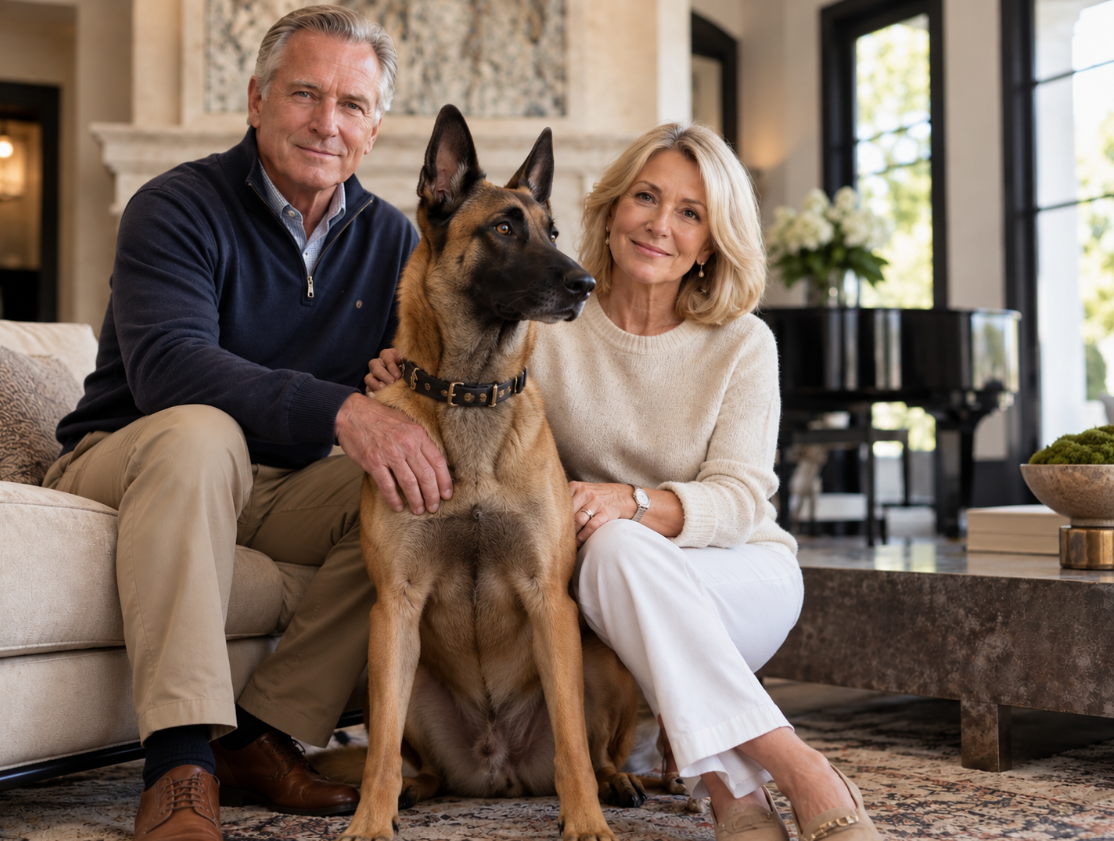
Trained protection dogs are a great fit for seniors who are retired and for those whose children have grown and left the nest. An adult protection dog for seniors will come into the situation trained to be obedient, docile, socialized, and responsive, all without having to train a new puppy. The important thing is creating an honest pairing with respect to the owner’s strength and activity level.
For most consumers, buying a protection dog is a decision that comes from a combination of safety in a home that has fewer people, as well as companionship in the newly-quiet environment. When obtaining protection dogs for seniors, it’s important to consider these points, along with transportation and medical emergencies.
Often yes, with honest matching
Many retirees and empty nesters are strong candidates because they are able to provide the time, consistency, and a calm environment where a trained dog can thrive. However, leash strength, mobility, travel, and backup care must also be considered before purchase.
The choice between a fully trained dog versus puppy is especially important. With a trained adult, obedience, socialization, and the household structure are all already established. No dog suits every household, and a reputable provider should assess a good fit, and not make assumptions that are based on age.
Why this stage of life often suits a trained protection dog
Retirement often allows for a predictable routine and regular engagement. An empty-nester household may also have fewer people coming and going, which makes it easier for the dog to settle.
Security can become more relevant when someone lives alone or shares a larger home with one other person. A trained dog for a single person living alone can offer both an alerting presence and steady company.
A protection dog for empty nesters can also fill part of the gap that is left when children move away. Seasonal travel, second homes, and extended vacations, however, should be planned for before actually bringing the dog home.
The companionship side of the decision
For many buyers, security and companionship matter equally. A well-socialized companion and protection dog provides company, structure, and a reason to get outside.
Research indexed by the National Institutes of Health has found positive associations between pet ownership and maintained physical function among generally healthy older adults. However, research across the field is mixed, and a dog shouldn’t be presented as a treatment for loneliness or a health condition.
A trained protection dog should be calm and social at home. Protective behavior is a controlled response, not a constant state of suspicion or aggression.
Handling, strength, and mobility: the honest conversation
The ability to handle is more important than age. There are many individuals who can take care of big dogs even after sixty or seventy, but there are some people who do not have such ability. The question is: when is a protection dog too much for an older owner – it largely depends on the individual.
The handler should be able to have control of the dog while on a leash at any given time, while entering and exiting the car, and transporting the dog for veterinarian visits. A trained dog that heels properly and stays in the commanded place is easier to handle than an untrained dog of similar size.
Some accommodations include trainer-approved equipment, vehicle ramp, traction on slippery floor, and an area where the dog can urinate or defecate without stairs. Prospective handlers should have a handling training session with the dog prior to purchasing, and then follow handler guidance and applicable leash laws.
Matching the dog to the handler, not the other way around
A good provider will not recommend a bad match. The right dog must be matched to the right handler, environment, and routine. It might be more suitable to have a stable and mature dog with an off switch rather than a young one.
Everyone who will share the handling responsibility must take part in the selection.
Breed considerations for a quieter household
German Shepherds and Belgian Malinois are both used in protection work, but their energy profiles can differ. A German Shepherd for seniors may be easier to match with a calm household because of the breed’s typical temperament and ability to settle.
Belgian Malinois are intelligent and athletic, with substantial exercise and engagement needs. They may suit active owners seeking an intensive working partnership, but they are not automatically the best protection dog for older adults.
The individual dog matters more than the breed label. Temperament, drive, maturity, size, shedding, grooming, and care costs should all influence the decision.
What daily life actually looks like
A typical day might include a morning walk and relief break, a short obedience or feeding routine, midday rest, an afternoon outing or enrichment activity, and a calm evening.
According to the American Kennel Club, exercise needs vary by breed, age, health, and energy level. Owners should discuss the specific dog’s requirements with the provider and veterinarian rather than relying on one universal figure.
A dog walker, relative, neighbor, or day-training service can help when a longer walk is impractical. Mental work may include obedience practice, scent games, puzzle feeding, and short training sessions. A suitable security dog for a quiet household remains alert and responsive while otherwise settling comfortably at home.
Planning for travel, health events, and the years ahead
Dog training is an investment that will pay off for many years to come. The owner needs to ensure that there is another person who will handle the dog when the owner goes on vacation or is unable due to sickness, or during change of season moves.
The other person should have previous dealings with the dog. History of medical treatment, training and feeding should be known by the caregiver. It is always good for the family to know another person who can take care of the dog in case they cannot do it.
Some families include their pets in estate planning using the help of an attorney. Planning out what will happen to the protection dog for retirees is aligned with responsible pet ownership.
What to discuss with your provider before you buy
Explain your activity level, mobility, other handlers, home environment, floor, staircase, relief area, travel history, and secondary care providers. Clarify whether companionship, alerting role, or protection capacity is the desired function.
Inquire about the handler training, delivery process, after-care services, dog’s health, temperament, and training records. You must meet the dog prior to finalizing your decision.
Scott’s K9 stresses the importance of selecting the correct dog for the correct handler and offers handler training at time of delivery. The information regarding the dog, delivery process, and support services can be verified in consultation.
Key takeaways
With all the training done, a protection dog could be right for a retiree or empty nester due to the training already being set up, as well as the time and consistency that can be provided at home. It is more important to consider handling ability, accurate matching, and a trial session rather than age.
Potential owners can request a consultation with Scott’s K9 regarding a dog that may be a good match for them.