An excellent home security audit should look at five distinct layers of security: perimeter, access points, detection, reaction, and routines. The trained protection dog is part of the reaction layer as deterrence since it can always be around you. This includes the locks, lighting, and cameras and has an effect that goes far beyond the confines of your home.
The arrival of the New Year provides a natural review point, just like when people test their smoke alarm batteries. There are changes in school schedules, changes in individuals in the household, plans for travel, and even outdated technology. An annual review will pick up on the slow drift between what your security plan looks like and what you actually do.
Begin with the five-layer audit below, spot gaps, and then decide where a dog can fit. Readiness and placement timing are as important as the dog’s abilities.
What a home security audit actually covers
A home security audit is a structured walk-through of how someone could get in, how quickly the household would know, and what happens next. Its five layers are perimeter, entry points, detection, response, and routines.
The goal is to prioritize fixes. More equipment may help, but an unused alarm or an unlocked side door can undermine an otherwise thoughtful setup.
Complete your new year home security checklist during daylight and again after dark. Lighting, shadows, camera images, and visibility from inside can look very different at night. Record each finding with a specific action, a responsible person, and a completion date.
Perimeter and entry points
Walk around the perimeter of your property. Look at fences and gate latches; trim landscaping that obscures the approach; check exterior lighting. Can you see someone approaching the front, side, and back doors without opening them?
Second, assess the normal entryways into your home: exterior doors, locks, strike plates, sliding glass doors, windows on the first floor, and garage entry points. This includes the door from your attached garage into your home. Assess pet doors for size, location, and security features.
Find loose hardware, damaged frames, and doors that family members habitually leave unlocked. Fix these physical vulnerabilities before relying on another layer to do the job. Security measures should not interfere with safe egress.
Detection: alarms, cameras, and alerts
Determine if the system is armed during regular days, at night, and when everyone goes out. Verify if there are any cameras that cover the approaches, such as side entrances and driveways. Ensure nighttime footage and alerting are functional and check if the person receiving the alerts is capable of taking action.
Event footage is good documentation, but a simple recording is not an intervention. Determine who receives an alert, who calls for help, and what happens when the primary recipient is asleep or unavailable.
Verify software updates, unique passwords, and shared access of connected devices. Take away access from former residents or service providers if necessary. The advice by CISA for consumers includes strong passwords and software updates as basic digital security measures.
Routines, travel, and digital exposure
A personal security assessment should follow people through their day. Consider school runs, gym visits, recurring absences, and deliveries left outside. Arrange package collection and a trusted contact for travel periods.
Review social posts that reveal your location in real time, announce an empty home, or show its layout. For executive home security, consider whether public professional information makes household routines easier to identify.
Write a simple family security plan: who calls emergency services, who contacts other household members, and where everyone should go. Identify a safe room or meeting point appropriate to the situation. Children and household staff should understand their roles without being expected to confront anyone.
The gaps most households find
It is important to consider the response layer: what takes place in the minutes between the alert being made and help arriving? The family might have video from the cameras but lack any clear plan of action.
There are other weaknesses that one should look out for, such as inadequate lighting around the house, unlocked side doors, disarmed alarms, and predictability. One should first focus on the easy and cheap fixes before proceeding to the more complex ones.
When conducting a home security review, it is important to take it beyond the front door since the family spends time outdoors in the yard, driveway, car, and walking around, where the fixed equipment might not be able to offer much help.
Where a protection dog fits in a layered plan
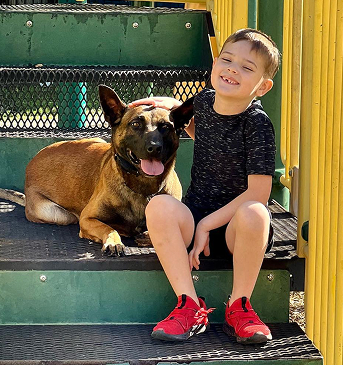
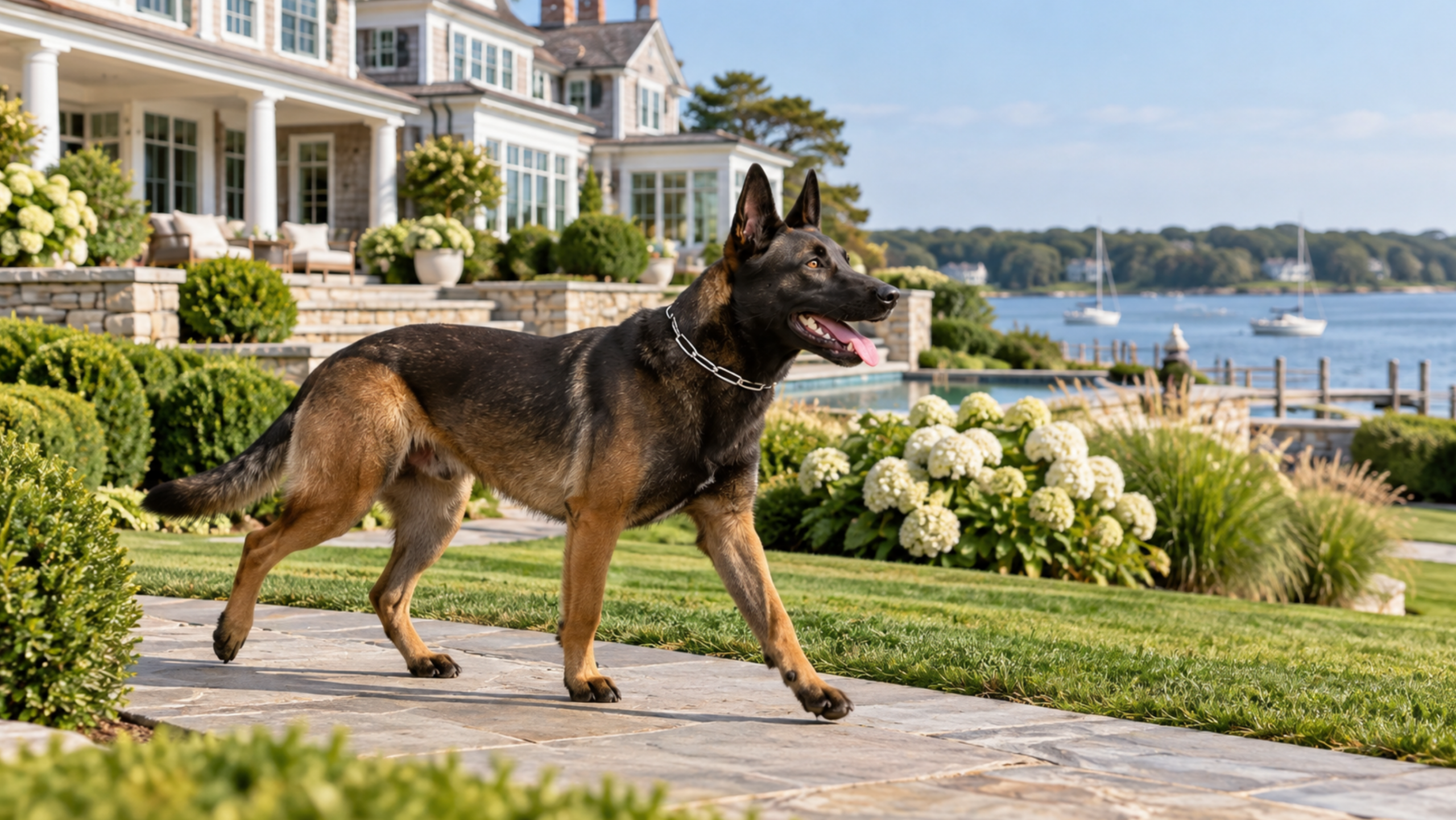
A trained protection dog adds visible deterrence, early awareness, and a handler-controlled response. It can accompany the family, bringing a security layer into everyday spaces beyond the house.
Within layered home security, its strongest contributions are detection and response, supported by deterrence. A dog’s presence may discourage an approach, while its awareness can draw the handler’s attention to activity. Its usefulness depends on training, temperament, and the handler’s ability to maintain control.
A protection dog for home security is different from the family dog without training that barks. Barking cannot indicate reliability in terms of protection. Training is supposed to inculcate obedience, the right behavior to adopt, and disengagement when directed by the handler. Calmness around household events needs to be in place along with protectiveness.
There is no guarantee of safety through any dog at all. It is part of a larger strategy altogether.
What a protection dog does not replace
The dog doesn’t replace the locks, the alarm system, the CCTV, lights, and a means of contacting someone in case of emergency. With the family taking the dog along, the property can no longer be monitored when empty.
Thus, the issue of the protection dog vs security system should be viewed from the perspective of complementarity. While the security system is meant to guard and monitor the property, the dog contributes to people’s safety.
Is your household ready for a protection dog?
Before considering whether or not a protection dog is worth it, evaluate if your home has the capacity to properly sustain a protection dog on a consistent basis:
- Time: Can someone handle regular exercise, handling, and short training sessions? Protection training must always be conducted by an experienced professional.
- Household: Are all of the adults on board? How do the children, visitors, employees, and pets integrate and interact?
- House: Is containment secure? Is there a travel-care plan and sufficient funding for proper nutrition, veterinary services, and ongoing training support?
- Insurance and laws: Have you reviewed your homeowner’s insurance and relevant ordinances prior to placement? Inquire about the requirements of the policy, not the assumption that the dog is covered.
A negative answer does not mean that something needs to be disqualified, just addressed before placement. After all, the dog is going to become an integral part of the family’s daily life.
Timing: building a protection dog into this year’s plan
A well-trained dog is not an impulsive decision. A family that makes this choice during January must leave time for selection, match, delivery, and handler training, rather than expecting it the same week.
Typical steps begin with consultation on routines, concerns, household composition, and prior dog ownership. A matching step should take into account temperament and lifestyle. Next is delivery, followed by in-home training of the handlers with relevant family members taught how to work with consistent commands and control. At Scott’s K9, this training is included in the process of delivery.
Find out from the provider when the availability and training will be available and arrange according to known travel, relocation, a newborn in the house, and renovation.
First, fix what will not change. Then, fit the dog where the audit has found a gap in the response and the household is able to satisfy its needs.
Key takeaways
So, is a protection dog worth it? First, review perimeter, entry points, detection, response, and routines. Pay particular attention to the response gap between receiving an alert and getting help.
A trained protection dog adds a layer that can stay with people, working alongside physical safeguards and electronic systems. Complete your audit first, and then discuss any remaining response gap with an experienced provider.