Taking a protection dog abroad is basically the same health and import process as traveling with any pet dog: a microchip, current rabies vaccination, an international health certificate from a USDA-accredited veterinarian, APHIS endorsement (where required), and compliance with destination entry requirements. You also need a return plan that meets with CDC rules. The additional planning involves size of the dog, airline transport, and any local restrictions on working or bite-trained dogs.
Requirements vary by country and they can change so check with official sources before every trip that you take. This guide explains the timeline, export paperwork, destination rules, airline transport, protection training considerations, and your return home.
Start with the timeline, not the ticket
Start by planning months ahead. Some destinations require rabies antibody tests, waiting periods, or advance permits that simply can’t be rushed. Traveling internationally with a dog starts with determining when the dog can legally arrive, then building the trip around that particular date.
Follow this order:
- Check the requirements of the destination and any transit country.
- Have your vet check the microchip, vaccination record, and any required tests.
- Ensure transport and book the space for your dog.
- Schedule the vet visit within the certificate window of the destination.
- Have APHIS endorse when needed.
- Get return paperwork before leaving if needed.
The most common mistake is booking flights without knowing that you need to wait. For instance, Japan usually requires dogs coming from non-designated areas to wait for 180 days after taking blood samples for an acceptable rabies antibody test.
Use a written calendar with your vet. Include lab time, permit processing, delivery of paperwork, and deadlines for arrival. A flight booking cannot reduce the waiting period required by the government. Keep copies of all paperwork, flight booking, your vet’s number, and the receiving agent’s number so that anything can be sorted out immediately while traveling.
Leaving the United States: export paperwork
The destination country sets the rules. Start with the USDA APHIS Pet Travel website, which organizes international pet travel requirements by destination and links to relevant certificates and instructions.
A USDA-accredited veterinarian checks the dog’s eligibility, completes required examinations, and issues the appropriate international health certificate. Accreditation matters: a veterinarian’s ordinary license alone does not establish authorization to perform this role.
What owners call a USDA health certificate for international travel is generally completed by the accredited veterinarian and then endorsed by APHIS if the destination requires government endorsement. APHIS reviews the submission; it does not replace the veterinary examination.
Plan for the cost of examining, testing, certification, and transporting as needed. Sending in your application electronically via the United States Department of Agriculture’s Veterinary Export Health Certification system might be an efficient way to apply, but it is important to find out which papers have to accompany the animal.
ISO standards usually demand that your pet first undergo microchipping before receiving his qualifying rabies vaccinations. Even a recent one may not count if given prior to chipping. You should have the vet check the chip numbers on all documents, lab reports, certifications, and permissions.
Arriving at your destination: entry rules vary widely
Entry requirements range from identification and vaccination documentation to antibody testing, waiting periods, permits, and quarantine. Pet import rules by country reflect disease risks, the dog’s origin and travel history, and national biosecurity policies.
Representative examples include:
- European Union: EU pet traveling requirements from the US involve microchip identification, a valid rabies shot and a signed EU animal health certificate. Tapeworm treatment is also required for some countries. It is necessary to know the requirements of a particular trip, and not assume that there will be a pet passport upon arrival.
- United Kingdom: Great Britain has its own set of rules, which involve document and approved route regulations, and a time-specific tapeworm treatment for dogs coming from the United States.
- Japan: Dogs arriving from non-designated regions face a detailed sequence involving identification, vaccinations, antibody testing, advance notification, and a waiting period.
- Australia and New Zealand: Import eligibility, permits, testing, and quarantine arrangements require substantial advance preparation. Confirm the applicable pathway before scheduling transport.
The destination state of Hawaii is not an international destination; however, the independent rabies prevention procedure in place here should still be considered in preparation.
Take note of the restrictions on breeds and muzzle regulations by the destination municipality in addition to the national guidelines. The destination’s veterinary authority and the destination country’s page within APHIS should both be utilized for the same.
These are just samples of the considerations necessary for individual travel. The reception of a new protection dog from overseas may involve more than just personal ownership.
Does protection training change the rules?
While protection training is not likely to establish a specific health certificate route for a privately-owned companion dog, local regulations may separately cover bite work training, guard dog use, or dangerous dogs.
Consult local regulations applicable to the place of residence, and not just the landing point of the flight. Inquire about any leash and muzzle requirements, registration, liability, and if continued protection training needs certain licenses.
If you are relocating permanently, consult a local attorney or relocation expert for clarification. Be clear about your dog’s training because a label such as “working dog” does not automatically mean a legal exemption.
Flying with a large working dog
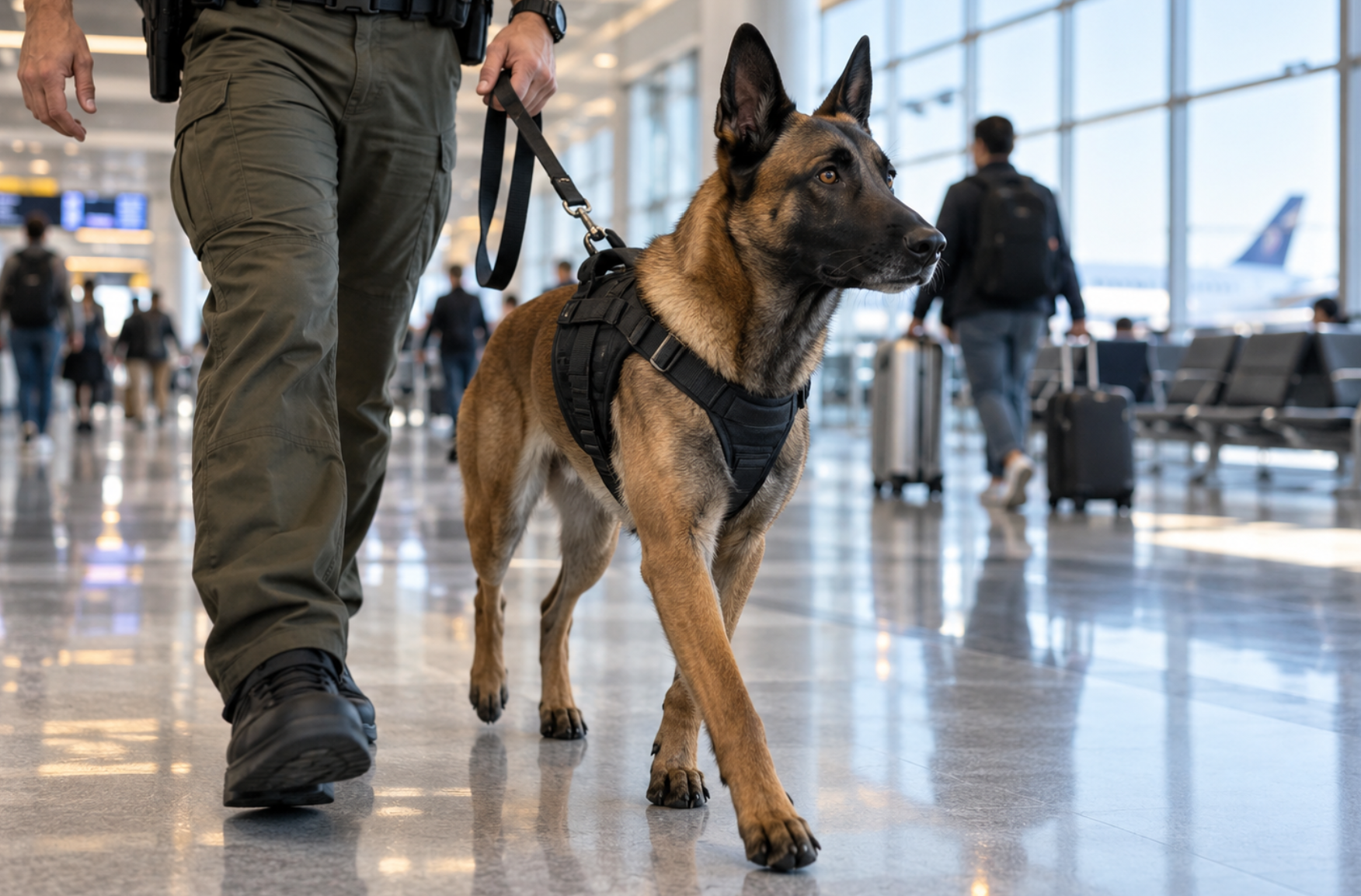
Most protection dogs are larger than ordinary cabin pet limits. Flying with a large dog internationally usually means transport inside the aircraft hold, through an airline’s cargo program or an experienced pet shipper. Some carriers offer checked-animal transport on eligible routes.
Protection training by itself doesn’t necessarily make a dog a disability service animal or establish cabin access.
Choose a container meeting the applicable IATA Live Animals Regulations and the carrier’s additional requirements. The dog must be able to stand and sit naturally, turn around, and lie down comfortably. Confirm the construction, ventilation, door security, water access, and any reinforced-container requirements before making a purchase.
Talk to the carrier about any breed restrictions, cargo availability, season embargoes, and temperature limits along the entire route. Booking a passenger seat isn’t the same as booking a space for an animal. Get confirmation for the animal along with the crate for each segment of the flight.
A direct route will minimize the number of transfers and handling, making things easier on you and the dog. If there are connecting flights, it’s important to know who will be responsible for the dog during those stopovers. Private air transport is also an alternative to be considered.
Preparing the dog for the journey
Prior crate training long before leaving is the best way to prepare. The actual mode of transportation should be slowly introduced, allowing for calm confinement that does not initially link to separation and transportation.
Feeding and hydrating should be coordinated by the veterinarian and the shipper. Avoid heavy feeding before flying, keep the dog hydrated and give them time for exercise and toilet stops before shipping. Use bedding that is familiar if the carrier allows it.
The use of sedation should be discussed with the veterinarian and the airline. IATA does not recommend sedatives and tranquilizers during air transport because of their adverse effects.
Coming back: CDC rules for dogs entering the United States
As of August 1, 2024, dogs coming to the USA need to be no younger than six months, microchipped, seem healthy, and have the receipt of the CDC Dog Import Form. Other CDC dog import rules will depend on the countries where the pet was in the last six months and where the dog got vaccinated against rabies.
If you import a dog from a high-risk country and get the vaccination for rabies in the USA, ask your local USDA-accredited veterinarian to issue the Certification of U.S.-issued Rabies Vaccination. You should also ask USDA to endorse this document before traveling. It is different from the ordinary rabies certificate. The new export health certificates cannot replace it.
Foreign-vaccinated dogs from a high-risk country will require additional steps of certification, reservation at an animal care facility which should be registered with CDC and transportation to the related airport. Services offered at such facilities include examination and revaccination; additional quarantine applies without an acceptable antibody test.
If you plan to bring the dog back to the US, before leaving, use CDC’s dog importation pages and Dog Importation Navigator to identify the correct pathway.
Living abroad with a protection dog
The dog’s training needs to travel with it. When you are relocating overseas with a dog, take the time to arrange continued obedience practice, local veterinary care, and housing that allows for a large dog.
Identify a veterinarian and emergency clinic before you arrive. If you need ongoing professional support, find a qualified trainer that is familiar with working dogs. Keep protection exercises under the appropriate professional supervision.
Confirm lease and building restrictions, local leash laws, registration obligations, and liability coverage that applies in the new country. Ask whether the policy covers the dog’s training and intended use.
New sounds, crowds, climate, and routines can initially affect the dog’s behavior. Use predictable meals, rest, walks, and short obedience sessions while the dog settles in. Maintain controlled introductions and keep your expectations realistic.
Key takeaways
Plan your trip backwards from the destination rules: preserve the right microchip and vaccination sequence, use a USDA-accredited vet, get the required APHIS endorsement, confirm the airline transport, and prepare the CDC return documentation. Protection dogs typically follow ordinary pet import procedures, with additional attention paid to local working-dog laws. Verify each and every requirement with official sources, and discuss your travel plans in full with your provider before booking them.