- What Is Bite Work?
- How Bite Work Fits Into Protection Dog Training
- Why Bite Work Requires Control and Obedience
- How Trainers Use Bite Work to Build Confidence and Responsiveness
- Why Bite Work Is Only One Part of Protection Dog Training
- Bite Work vs Aggression: What Is the Difference?
- How Safe, Structured Bite Work Is Developed Over Time
- What Temperament Traits Matter Before Bite Work Begins?
When people think about protection dog training, they usually think first about bite work. Likely because it’s the most visible and, really, dramatic part of working dog training. And, as one might imagine, it’s also one of the most misunderstood. Bite work, (as some people might believe), is not about fostering aggression, it’s actually about structure, discipline, and control. In professional programs like Scott’s K9, bite work is only introduced after a strong foundation has been firmly established.
What Is Bite Work?
“Bite work” is the controlled drills where a dog is taught to engage with a target, usually a padded sleeve or suit, on command. These exercises are conducted under strict supervision and follow structured protocols that are designed to reinforce discipline and responsiveness.
Instead of encouraging uncontrolled behavior, bite work is about teaching a dog when to engage and, of course, when to disengage. In well-structured programs, the dog learns over time that every action is guided by the handler.
How Bite Work Fits Into Protection Dog Training
Bite work is just one component of protection dog training, and it’s never the starting point. Before any controlled engagement training begins, dogs go through extensive foundational work that includes obedience, environmental exposure, and socialization.
Protection dog training is a layered process, and bite work fits into it as an advanced stage and not just a standalone skill.
Why Bite Work Requires Control and Obedience
With bite work, there’s a big emphasis on obedience and control. A dog has to be able to follow commands, especially in high-energy situations, before any engagement training (bite work) is brought in.
It’s control that separates a trained protection dog from an unpredictable animal. The dog needs to be able to start, stop, and redirect their behavior immediately, all based on the handler’s instruction.
Not sure which breed suits your lifestyle?
How Trainers Use Bite Work to Build Confidence and Responsiveness
In professional settings, bite work may be used as a tool to build confidence in a controlled environment. Dogs are gradually introduced to different scenarios so they can develop comfort and familiarity over time.
This gradual exposure supports consistent behavior because as the dog becomes more confident, responsiveness to commands typically improves.
Trainers also use bite work to fine-tune timing and precision. Each exercise is an opportunity to reinforce clear communication between the dog and the handler.
Why Bite Work Is Only One Part of Protection Dog Training
Even though bite work is important, it’s just a small piece of protection dog training. A well-trained protection dog needs to be reliable in a multitude of situations, and many of these don’t involve engagement at all.
Being able to stay calm in public, superb responsiveness and adjusting to different environments are also very important. These are developed by using expanded working dog training methods that prioritize balance and consistency.
To focus just on bite work would be to overlook the entire training process.
Bite Work vs Aggression: What Is the Difference?
One of the common misconceptions is that bite work creates aggressive dogs. What is actually true is that dogs that are trained properly are often more controlled and predictable than the ones that are untrained.
Most would characterize aggression as being uncontrolled and reactive behavior. Bite work, on the other hand, is structured and purposeful. The dog responds only when they are directed to do so and disengages just as reliably.
The distinction here is important. The goal of protection dog training is not to create aggression; it’s to develop controlled, situational responses that are guided by the handler.
How Safe, Structured Bite Work Is Developed Over Time
Bite work is introduced gradually and moves forward in stages. It starts with exercises that focus on establishing familiarity with the equipment (bite suits, sleeves, pillows, etc.) and on reinforcing the basic commands.
As training goes on, the situations that the handler poses to the dog become more complex, and are always controlled. Trainers carefully manage these variables: environment, timing, and intensity, so the dog is consistent, no matter the conditions.
This step-by-step approach means that the dog can develop skills without being overwhelmed. Each stage of training reinforces the principles of discipline and responsiveness.
What Temperament Traits Matter Before Bite Work Begins?
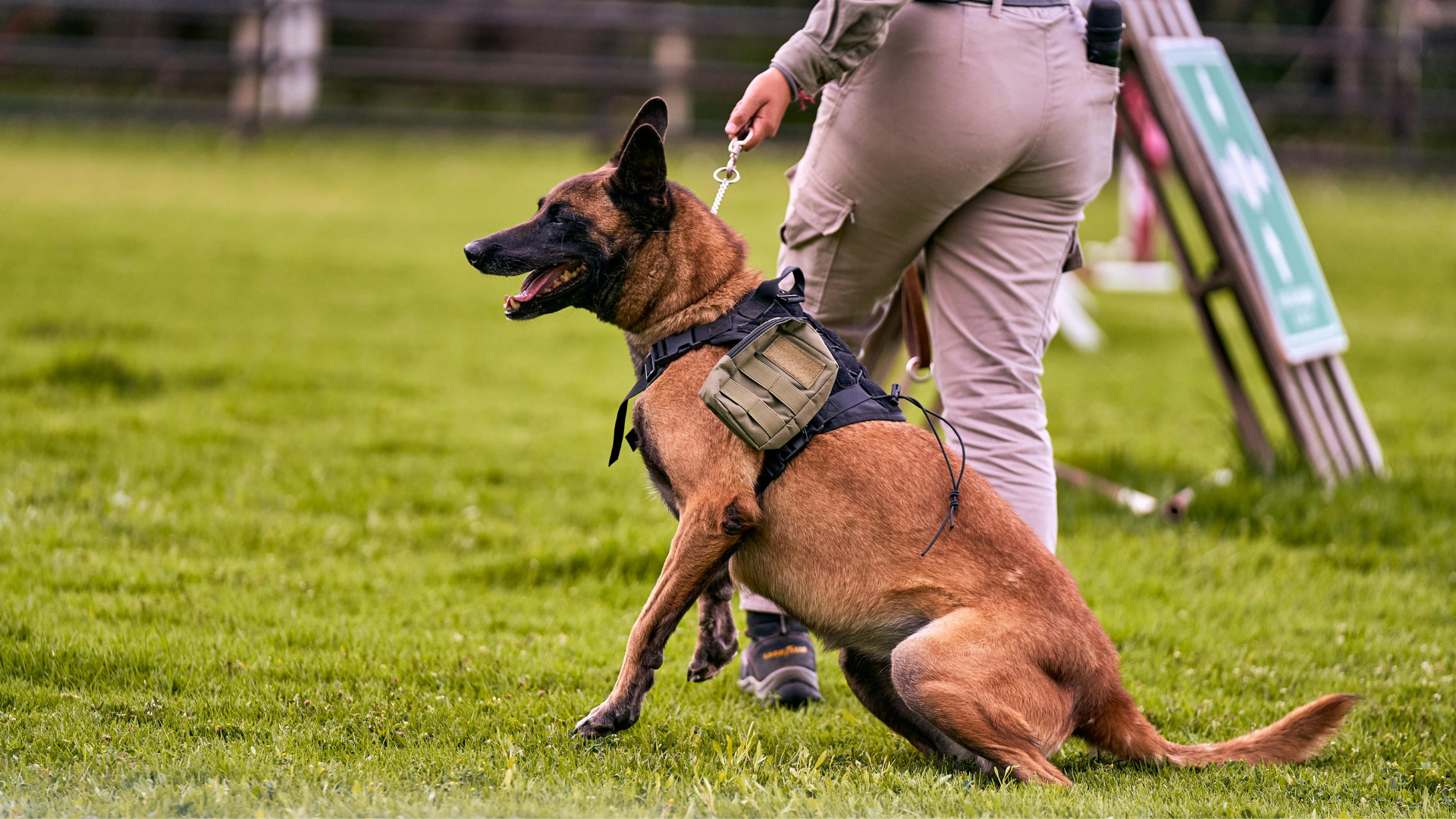
Trainers know that not every dog is a candidate for this type of training. German Shepherds and Malinois have particularly even temperaments and make excellent protection dog training candidates.
Confidence, stability, and willingness to engage are all very important. The dog should be able to handle new environments and stimuli without getting overly reactive or fearful.
A dog with a balanced temperament serves as the foundation for successful training. Without it, the dog is likely to struggle in structured exercises.
Common Misunderstandings about Bite Work
- One of the most common misconceptions is the idea that it is the primary focus of protection dog training. In reality, it’s just one element within a larger system that emphasizes discipline and reliability.
- Another misunderstanding is that bite work makes dogs dangerous. The fact is, properly trained dogs are generally more controlled than those who haven’t had the structured training.
- It’s also not something that should be attempted without professional guidance.
How Bite Work Supports Real-World Protection Dog Performance
Bite work reinforces the dog’s ability to respond to commands under pressure. It contributes to the dog’s overall readiness, but doesn’t define it entirely.
In real-world scenarios, a protection dog must assess situations, stay composed, and act only when necessary. Bite work helps prepare the dog for this level of responsiveness.
However, it’s really the combination of obedience, situational exposure, and structured engagement – that ultimately determines the dog’s effectiveness.
What to Know Before Choosing a Protection Dog Training Program
Are you ready to explore the world of protection dogs? Look beyond “bite work” and instead, evaluate the training program in its entirety. A reputable program makes structure, safety, and long-term reliability priorities.
Ask about how training is introduced, the role of dog temperament, how the dog’s progress is measured, and how they are evaluated. Transparency here likely indicates a high level of quality.
If you’re looking into trained protection dogs or want to better understand how structured programs are developed, Scott’s K9 can offer you valuable insight into how professional protection dog training is approached and maintained. Give Scott’s K9 a call today.