
- What a Protection Dog Adds for a Public Figure
- The Security Realities Public Figures Live With
- Discretion: A Dog Draws Less Attention than a Visible Detail
- Presence and Deterrence, Without Escalation
- How a Protection Dog Fits an Existing Security Program
- Life on the Road: Travel, Tours, and Season Schedules
- Family Coverage When the Principal Is Away
- What to Look for in a Provider
- Responsibilities and Realistic Expectations
- Key Takeaways
Athletes and celebrities find personal protection dogs attractive because they are able to provide continuous presence, early warning, and deterrence. They also function as discrete companions for their families. The protection dog offers many advantages because it is able to patrol places where a protection detail is not, without alerting the general public that it is there for protection. There are four main reasons why an individual might choose a personal protection dog and these include controlling the issue of visibility and privacy, ensuring protection for the family when the person isn’t there or asleep, maintaining discretion, and companionship.
What a Protection Dog Adds for a Public Figure
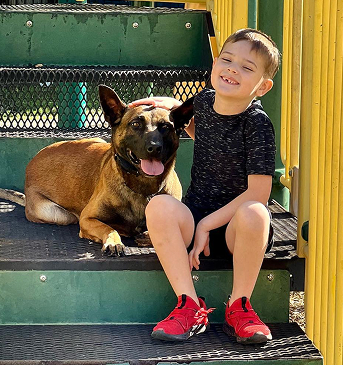
Personal protection dogs offer a consistent presence, they warn when someone is approaching, pose a visual deterrent, and provide reliable companionship. While cameras and alarms alert you to every movement, the trained dog is right there, ready to respond to handler commands.
But, keep in mind that this isn’t simply a protection dog vs. security system decision. A dog should supplement access controls, surveillance and professional personnel. Success requires carefully matching a protection dog with a household that is committed to exercise, structure, and handler guidance.
The Security Realities Public Figures Live With
Recognizable faces, public schedules, geotagged content, fan encounters, and widely known residences can make privacy difficult to preserve. Persistent pursuit and unwanted contact are also documented concerns beyond celebrity culture. The Bureau of Justice Statistics defines stalking as repeated unwanted contacts or behaviors that cause fear or substantial emotional distress, or would do so for a reasonable person.
Family, staff, vendors, and guests may enter and leave an address that strangers can identify. Coverage may be thinnest overnight, between projects, and while the principal travels. Protection dogs for celebrities and athletes provide presence during those gaps without making the home overtly guarded.
Discretion: A Dog Draws Less Attention than a Visible Detail
A well-mannered dog on a leash generally reads as a family pet. A visible protective detail can signal that someone notable lives in or is visiting a location. This difference matters to people who want ordinary neighborhood walks, private family outings, and low-profile travel.
Celebrity protection dogs integrate socially into the household without making every routine feel like a security operation. That discretion also matters to family members who do not want to live within a visibly heightened posture.
What a Trained Dog Does That a System Cannot
The trained dog can position itself toward the person that is approaching, give physical presence, and react to the handler’s commands given in real time. It will also be available during a power failure, disconnection, and when moving from one place to another.
Systems have their own certain strengths. The dogs aren’t always watching the entire perimeter, they don’t keep records, and certainly can’t replace cameras or alarms or even have access to control systems. Successful home security for public figures uses all of these layers.
Presence and Deterrence, Without Escalation
The central value of an executive protection dog is presence and deterrence. A properly trained dog should be controlled and discerning, not unpredictable or reactive. Quality training produces a dog that is calm and social by default, with protective behavior occurring as a trained response under handler direction.
For a high-profile owner, control is essential. A stable dog around staff, visitors, crowds, and media is an asset; a reactive dog is a liability. Owners must follow handler guidance and local laws, and no dog guarantees a security outcome.
How a Protection Dog Fits an Existing Security Program
Public figures may already use residential systems, access control, drivers, protective personnel, and travel plans. The dog lives with the family, providing a constant layer between scheduled measures.
Coordination keeps that layer effective. Security personnel, house managers, and relevant staff should understand the dog’s routines, boundaries, and approved commands, with one adult serving as the primary handler. Reputable providers work with existing security advisors and assess the residence, household, and schedule. Written routines also help new employees receive consistent instructions.
Life on the Road: Travel, Tours, and Season Schedules
Some owners will travel with their dog while others choose to keep their dogs at the primary residence where the insurance coverage is important. The trained protection dog for travel needs preparation for transport laws, vaccine certificates, accommodations, renting policies, climate, and daily routine.
The uniformity in command is more important than the place. Those people who are traveling with the dog need to use the same commands and routine. When the dog is left at home during the travels, the other handler or caregiver will have to ensure the same routine for the dog.
Family Coverage When the Principal Is Away
Many athletes and entertainers choose a protection dog because the family remains home during a season, tour, or shoot. Protection dogs for high-net-worth families offer companionship and an additional security layer, but every family member should be included in the matching process.
Adults should feel comfortable handling the dog, while children need guidance on respectful interaction. Young children should always be supervised with any dog. A sound placement considers the needs of the whole household, not only the principal.
What to Look for in a Provider
A qualified provider should offer verifiable training history and demonstrate the dog’s obedience and control in person. Buyers should expect health, temperament, and pedigree documentation; real-home socialization; and matching based on the household, property, and lifestyle.
Handover training and ongoing handler support are equally important. For a personal protection dog for public figures, discretion, client confidentiality, comparable references, and a willingness to coordinate with current security advisors should all be part of the evaluation.
Responsibilities and Realistic Expectations
A need for exercise, mental stimulation, structured routine, discipline reinforcement, and visits to the vet is essential to ownership. Future dog owners would also be well advised to discuss insurance issues, licensing policies, leash laws, and other municipal/state regulations with their own legal experts.
All dogs are not created equal, and an ethical dog provider will let you know this. The best results happen when dog owners treat the animal as both worker and family while keeping up a comprehensive security program.
Key Takeaways
Celebrities and athletes choose personal protection dogs based on the ideas that they are present all the time, their awareness, discretion, and their ability to protect all of their family members between security assignments. The dog works together with other mechanisms and professionals without taking their place. It depends on how well the match has been done, the training that the handler receives, and how much support and routine is provided to make it work successfully. If you are interested in discovering how a protection dog can fit your family and schedule, contact Scott’s K9 for a confidential consultation.