- Belgian Malinois Quick Facts for Families
- Belgian Malinois Temperament: What You Need to Know
- The Best Type of Owner for this Breed
- What Makes the Belgian Malinois a Good Family Dog?
- The Importance of Professional Training for Family Life
- Puppy or Fully Trained Adult: Which Is Better for Families?
- Are Belgian Malinois Good with Other Dogs?
- Belgian Malinois vs. German Shepherd for Families
- Is Your Family Right for a Belgian Malinois?
- Frequently Asked Questions
Belgian Malinois can be excellent family dogs, but only for the right household. They are intelligent, loyal, and highly responsive working dogs that need daily exercise, structure, and consistent leadership. With professional training and early socialization, a Malinois can be safe and social with children and visitors while staying alert to genuine concerns. Families with limited time at home, or who want a low-maintenance pet, are usually better served by a different breed. This guide covers Malinois temperament, which households are the best fit, how the breed does with kids and other dogs, and why a fully trained dog is the most reliable path for most families.
Belgian Malinois Quick Facts for Families
| Trait | Detail |
|---|---|
| AKC breed group | Herding |
| Height | 24-26 in (males), 22-24 in (females) |
| Weight | 60-80 lb (males), 40-60 lb (females) |
| Life expectancy | About 12-15 years |
| Energy level | Very high; needs daily exercise and mental work |
| Temperament | Intelligent, loyal, alert, reserved with strangers |
| Best fit | Active households with time for structure and training |
Belgian Malinois Temperament: What You Need to Know
Before bringing any dog into your home, it’s important to understand the breed’s temperament. This helps ensure that you’re prepared to meet your new dog’s needs and that the dog is meeting your needs, too. Belgian Malinois are working dogs, characterized by their intelligence, energy, and high responsiveness. An especially loyal breed, they’re vigilant, hard-working, and always ready for any job. However, energetic dogs need to be exercised properly, and intelligent dogs require ample entertainment to prevent them from getting into mischief.
For families comparing family protection dogs, a Belgian Malinois can be a good fit, but you need to be clear about what you need from your dog. If you’re looking for an immediately friendly and hyper-social dog, a Belgian Malinois might not be the right fit. While they are confident dogs and deeply loyal to the people they love, they are somewhat indifferent to strangers. Additionally, because they’re naturally protective, they will require consistent training to ensure that they don’t apply those protective instincts every time the doorbell rings.
The Best Type of Owner for this Breed
The more useful question is which type of family is best suited to the breed. Every family has a different lifestyle, and the purpose of getting a protection dog will vary.
This might be the hard part, but it’s vital to be completely honest with yourself about the amount of time you can spend with your dog, the space you can provide for it, and how practical it is to keep up the training your protection dog received.
Protection dogs are loving, but they are not typical “lap dogs.” They despise boredom and thrive on work and play. They need owners who have lots of energy to devote to running with them, playing with them, continuing to train them, and helping them stay active. Are Belgian Malinois good with kids and a busy household? They can be, but consider the following.
- Households where someone is home for much of the day, or where the dog can travel along, tend to be the best fit. A Malinois left alone through long workdays can become bored and restless.
- Families with a stay-at-home parent, executives who travel, and owners who work from home suit the breed’s need for companionship and activity.
- Owners who value an added layer of security, and who are prepared to maintain the dog’s training, get the most from a trained Malinois.
The Belgian Malinois is a working breed. They are happiest and most satisfied when they are given regular jobs and stimulation throughout the day. If you have a job that allows your protection dog to travel with you, or you work from home, they will be the happiest. A trained Malinois is happiest when it is part of the family’s daily routine, not left on its own.
What Makes the Belgian Malinois a Good Family Dog?
The Belgian Malinois was developed as a working breed, and that heritage is what makes a well-trained Malinois a rewarding family companion. They bond closely with their household, thrive on shared activity, and respond quickly to clear direction. Active families who enjoy walks, hikes, and time outdoors often find a Malinois to be an energetic, engaged partner.
Malinois puppies are known to mouth and nip during development. With consistent guidance this phase passes, but it is one reason many families choose a dog that has already completed obedience and socialization training.
For families seeking an added layer of security, a professionally trained Malinois offers a combination few breeds match: a calm, social presence at home and the ability to recognize and alert to unusual situations. A trained protection dog is taught to stay under handler control and to act only on its handler’s direction. Proper handling, structure, and continued reinforcement remain important, and owners should follow all handler guidance and local laws.
The Importance of Professional Training for Family Life
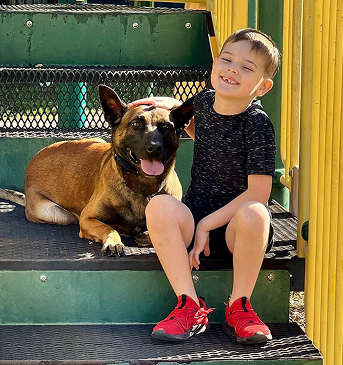
If you have a family, you’ll want to know: Are Belgian Malinois good with kids? This breed can be wonderful with kids since they’re extremely loyal to their loved ones. As with other dogs, the key to well-behaved dogs who are patient with kids is ample and early training and socialization. Children are impulsive, and they frequently do things like pulling on dogs’ ears, fur, or tails, or surprising them while they’re eating or sleeping. Early socialization and exposure to children are vital. This allows your dog to get used to spending time around kids so they can be prepared for the unpredictability of kids.
But that’s only one step. Belgian Malinois are smart and very responsive to training of all kinds, so training your dog early about how to respond to unpredictable kids is essential. Without professional training, a Belgian Malinois is unlikely to be a reliable family dog. Professional training should start early with any dog that has natural protective instincts, so they know when and where to use them. It’s also important that your dog learns to quickly respond to commands and signals, so that you can trust that they’ll be obedient, even when a child is testing boundaries.
With early and consistent training and socialization, a Belgian Malinois can be a loyal, dependable family protection dog.
Puppy or Fully Trained Adult: Which Is Better for Families?
For most families, a fully trained adult Belgian Malinois is the more predictable choice. A puppy’s temperament, drive, and protective instincts are still developing, and shaping them into a reliable family companion takes months of consistent, expert work. A fully trained dog has already been evaluated for temperament and has completed obedience, socialization, and protection training before it joins the household, so families can assess fit before placement. Whichever path you choose, ongoing reinforcement and handler guidance are part of responsible ownership.
Are Belgian Malinois Good with Other Dogs?
Belgian Malinois are incredibly intelligent and can be trained to do nearly anything. If adequately socialized and trained from an early age, Belgian Malinois protection dogs will happily play and socialize with other well-trained dogs. If you have another dog already, you’ll likely wonder: Are Belgian Malinois good with other dogs in the home? They form strong bonds with dogs that work or live with them, so if you’re planning on getting a second dog or have one already, they’ll likely become best friends.
A trained Belgian Malinois should be introduced to other dogs gradually and under supervision. Malinois tend to be confident in group settings and may try to assert themselves with a dog that is pushy or poorly socialized. Choosing well-mannered playmates and maintaining the dog’s obedience training keeps interactions calm and predictable.
Belgian Malinois vs. German Shepherd for Families
Both breeds are widely selected for family and personal protection. The right choice depends on your household’s activity level and how much drive you want in a companion; neither breed is the best fit for every family.
| Factor | Belgian Malinois | German Shepherd |
|---|---|---|
| Size | Lighter, 40-80 lb | Heavier, up to 90 lb (males) |
| Energy | Very high | High |
| Pace at home | Quick, intense, highly responsive | Generally steadier and more settled indoors |
| Best fit | Very active households | Families wanting a steadier pace |
Learn more about our German Shepherd protection dogs.
Is Your Family Right for a Belgian Malinois?
For active families who can provide daily exercise, structure, and companionship, a professionally trained Belgian Malinois can be a loyal, affectionate companion and an added layer of security. The breed is not the right choice for every household. A common misconception is that protection-trained dogs are unsuitable around children; in practice, a well-selected, well-trained Malinois is taught to be obedient, stable, and social at home.
Request a private consultation with Scott’s K9 to discuss whether a trained Belgian Malinois is the right fit for your family.
Frequently Asked Questions
Are Belgian Malinois safe around young children?
With early and consistent training and socialization, a Belgian Malinois can be great with kids. However, it is always advisable to supervise young children with any dog.
Do Belgian Malinois require special training to be family dogs?
While Belgian Malinois are extremely loyal to loved ones, they should receive professional training to prepare for the unpredictability of kids. This helps ensure obedience, patience, and adaptability so they don’t apply their natural protective instincts incorrectly.
How much exercise does a Belgian Malinois need as a family pet?
This breed is high-energy and requires regular exercise to work that energy off. Since kids have lots of energy, too, you can involve them by walking, hiking, swimming, or just playing with your dog. Your family should be dedicated to keeping your Belgian Malinois active daily.
Are Belgian Malinois aggressive towards strangers or visitors?
Belgian Malinois are typically indifferent toward strangers, but because they’re naturally protective, they could respond protectively if they think the situation calls for it. Make sure your Belgian Malinois is well-trained and socialized so they know how to respond appropriately.
Can a Belgian Malinois live with cats or other small pets?
Many can, especially when raised with them or introduced carefully as trained adults. Malinois have strong chase drive, so introductions should be gradual and supervised, and obedience training should be maintained. Share details about your current pets during your consultation so temperament can be matched to your home.
Is a Belgian Malinois a good choice for first-time dog owners?
A Malinois puppy is usually a challenging choice for first-time owners because of the breed’s energy and drive. A fully trained adult with ongoing handler guidance can be a better fit, provided the family is committed to daily exercise and maintaining the dog’s training.
How long do Belgian Malinois live?
Belgian Malinois typically live about 12 to 15 years. Planning for that lifespan, including the dog’s activity needs as it ages, is part of choosing the breed for a family.