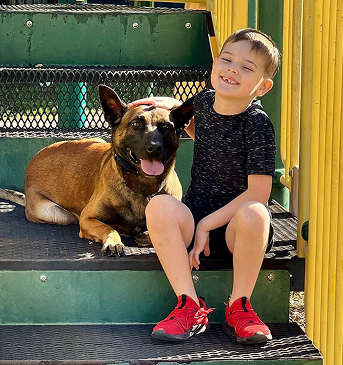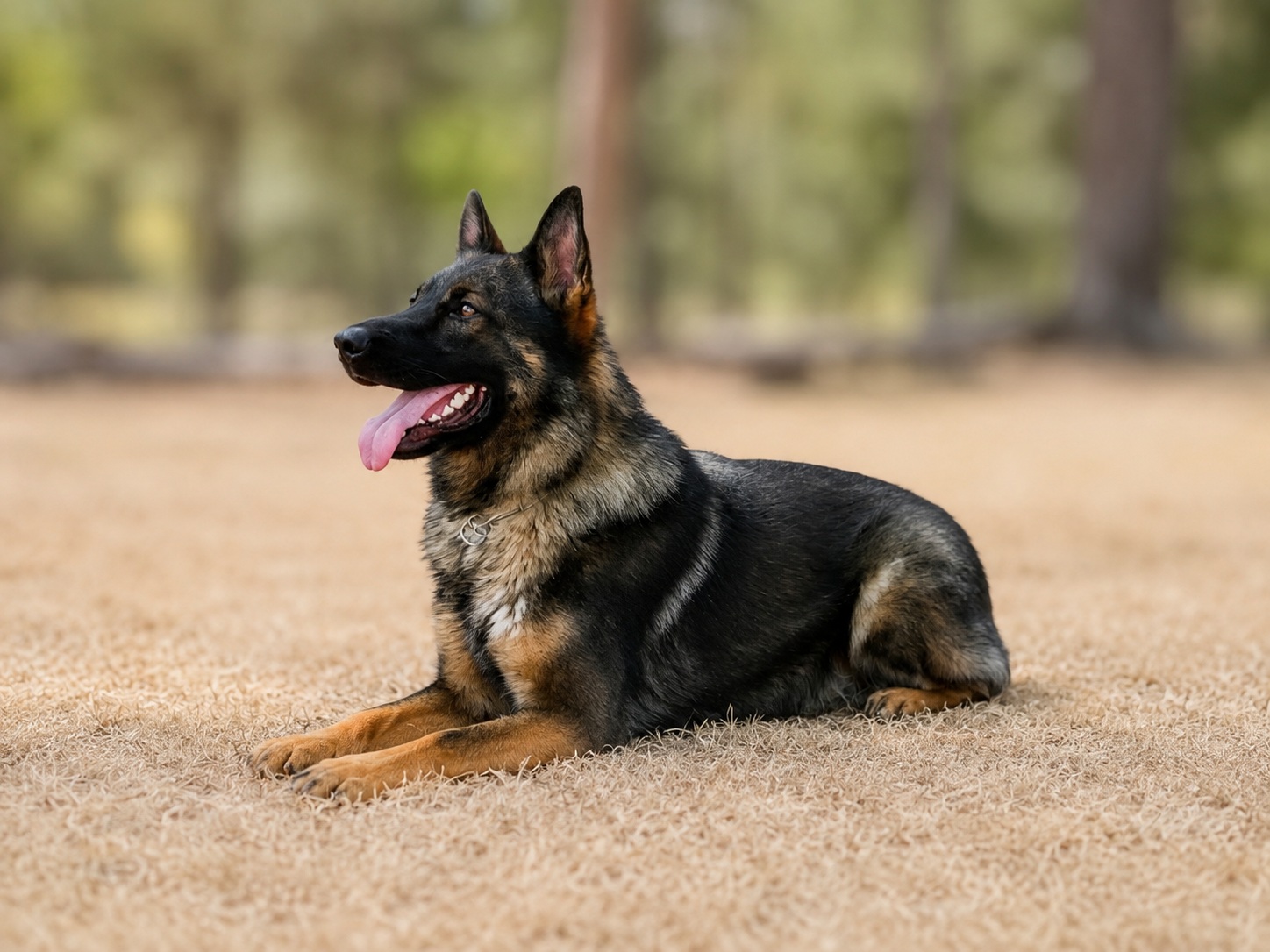
A protection dog handover is two days of hands-on training that help you learn how to handle your dog in your own home. During that time, your dog gets to know the household, and everyone learns about the routines that will keep the dog’s training consistent. Once the trainer leaves, the first week is about keeping those routines simple and giving your dog time to settle in.
If you’re wondering what to expect when buying a protection dog, start with the transition itself. Here’s how to prepare before delivery, what to focus on each day of the handover, and when to ask for help once you’re on your own.
Preparing your home before delivery
Before protection dog delivery, set up a quiet place where your dog can rest, preferably away from foot traffic. Decide where the crate or kennel will go, set out food and water bowls, and have the food and basic supplies ready. Ask Scott’s K9 ahead of time what food your dog currently eats, the equipment you’ll need, and whether the trainer has any requests for your particular setup.
Arrange for the first day to be relatively quiet in terms of schedule. Arrange for those who will be regularly handling the dog to be present during the delivery process. Ask the trainer how soon it would be appropriate for children to be there and how you should go about introducing the dog to any pets you currently own.
Day one: introduction and handler foundations
Use the first day to get comfortable handling your dog, and calmly make the introductions. The trainer can guide introductions to family members and help you decide which areas of the property to introduce first. Give your dog breaks between introductions and practice so there’s time to take in the new surroundings.
The foundations of protection dog handler training include learning the cues your dog already knows and practicing familiar obedience with the trainer there to coach you. It’s one thing to watch the trainer work with your dog. It’s quite another to do it yourself and find out where you need a little more practice. If you’re unsure about something, ask the trainer to go over it again while you can still practice together.
Day two: real-world routines and reinforcement
On the second day, you can capitalize on the skills learned during the first lesson and go over the process to understand how it best integrates with your daily life. Contact Scott’s K9 to receive the handover schedule so you can talk about the important routine matters concerning your family. It may be related to taking your dog for walks in your area, getting the dog in the car, or even meeting with your visitors.
At this point, define all of the regulations for the household. If two people participate in walking the dog and training it, both must understand the trainer’s requirements. Also decide which rooms are closed for access.
The first week at home
Structure and consistency matter more than excitement during your first week with a protection dog. Keep meals, bathroom breaks, walks, and rest on a predictable schedule. Limit visitors and follow the trainer’s guidance on where to take your dog. Keep obedience sessions short and use the same cues and rules across the household.
When you’re bringing home a trained protection dog, it’s easy to focus on how much the dog already knows. Think about how much is new from the dog’s point of view: your footsteps in the hallway, the sound of the garage door, and the times people come and go – are all things that your dog is learning. Part of settling in a new protection dog is giving these ordinary moments time to become familiar. Let your dog rest between activities and follow the trainer’s plan for supervised introductions to children and other pets.
Common first-week mistakes to avoid
- Meeting too many people or going too many places. It’s natural to want friends to meet your new dog. Give your household time to get comfortable with the routine before adding extra visits and outings.
- Letting the rules change from person to person. If one person allows the dog on the couch and another asks the dog to get down, the dog has to figure out whose rules apply. Agree on what you’ll allow and stick with it.
- Skipping obedience because your dog seems settled. A relaxed evening is a welcome sign. Keep up the short practice sessions your trainer recommends so your dog gets used to working with you, too.
When to reach out for support
It is normal for questions to arise in the first week. Scott’s K9 responds to questions even after delivery, so if anything seems out of the ordinary, or if you are having problems with a particular routine or the way your dog relates to a child or other animal, feel free to call.
Describe the situation, including the context of the problem, to the best of your ability. The more specific your question, such as behavioral changes when a person enters through the garage, the more information you provide for the trainer who can then help with a thoughtful response.
Key takeaways
The protection dog placement process continues once your dog arrives. Make sure that you make some quiet place for your dog in advance, rehearse the basic handling procedure upon the receipt of the dog and create a calm routine for the first days. Pose your queries at any point of time and let your dog get used to the people and habits of your house. Obey your instructor and local legislation regulations throughout this period, as well.